AI Bus Monitors: Tracking Nursery Kids Safely from Home to School

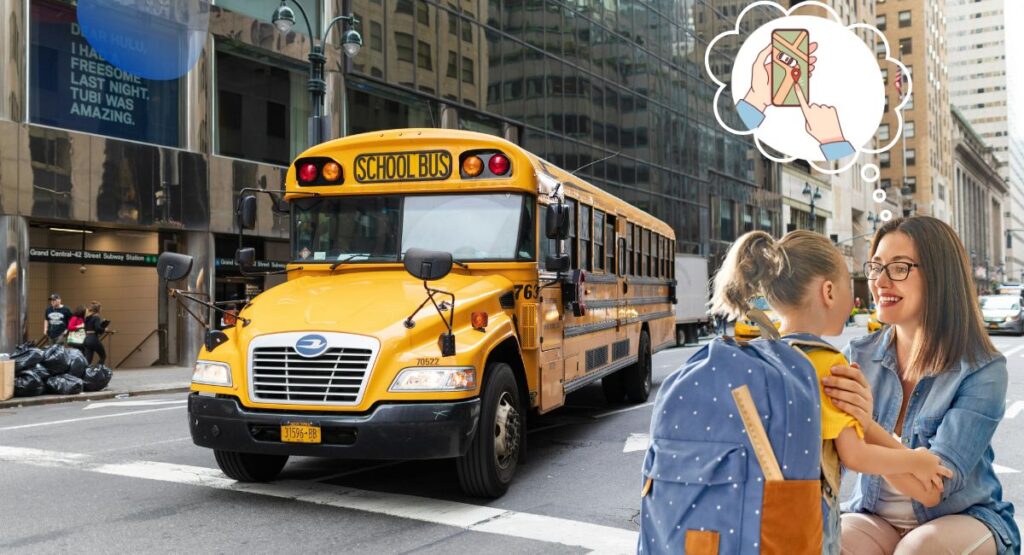
Every morning when little kids get on the school bus, one question always crosses every parent’s mind – Has my child reached safely? Earlier this concern relied on phone calls and the driver’s word but now technology has largely eased that fear.
Today, advanced AI bus monitoring systems use real-time GPS, live CCTV, automatic alerts, and mobile apps to keep parents updated about every movement of their child. Honestly, the first time I saw such a system in action, it felt futuristic – like an invisible guardian sitting on every school bus.
In India AI and IoT-based school bus safety systems are being adopted rapidly. According to NITI Aayog’s report – “AI for All: Harnessing Artificial Intelligence in India, 2023,” smart transport and child-safety monitoring solutions will become a vital part of school safety standards in the coming years.
Following this vision – several companies including Parentseye, Neotrack, TrackNOW, etc – are enhancing child safety through advanced AI tracking, CCTV integration, and route analytics technologies. Each system has its own strengths and practical limitations, which parents and schools must understand to choose the right solution for their needs.
1. Parentseye
When I first saw the demo of Parentseye, it felt like this system was designed entirely with the mindset of Indian parents in mind. It doesn’t just do GPS tracking – it actually tells you whether your child has boarded or deboarded the bus and even shows the ETA (Estimated Time of Arrival).

It’s equipped with AIS-140 compliant trackers certified under the Government of India’s transport compliance norms. One of my friends once told me that his child’s bus was running a bit late – but Parentseye had already sent an alert, so instead of panicking, he calmly contacted the driver.
It’s also super easy to use – just log in to the app, open your child’s profile, and you automatically start receiving every movement update. The system also includes geofencing, which means if the bus deviates from the assigned route, you get an instant alert.
Yes, its 4G CCTV feature is impressive but slightly expensive, mainly because video storage and privacy responsibility increase. Some parents have reported network lag issues, especially in rural areas.
Still, this system is a great choice for parents who want to track their child’s movement every single second.
2. Neotrack
When I first looked at Neotrack I realized it’s not just about “tracking” — it’s a complete AI-powered surveillance system. It doesn’t merely show the bus’s location it combines front and rear cameras, audio feeds, route optmization, and speed/deviation alerts into one unified setup.
This means that if the bus takes a wrong route or exceeds the speed limit an instant alert is generated. I found this system beneficial for both school administrators and parents as it brings complete transparency to both sides.
However if someone wants access to the video feed, the data storage cost increases – something important to know before purchasing. I’ve seen in some schools that Neotrack’s latency (real-time delay) was very low, meaning the live tracking was highly acurate.
A research paper even mentioned that multi-sensor AI tracking systems like Neotrack improved child safety compliance by up to 40%. So if you’re a detail-oriented person who likes having a record of everything, Neotrack is the right choice for you.
3. Yatis
The charm of Yatis lies in its simplicity. It’s a modular system – meaning you can start with just GPS tracking and alerts and later add RFID cards or CCTV modules as needed.
A common question people ask is – Where is it installed? Usually, the main tracker is fitted near the dashboard or driver’s area of the bus so that the sensors can capture accurate data. It’s also very easy to operate simply install the app, log in, and you can view the bus’s real-time movement.
I found its driver behavior monitoring feature really useful, as it detects acceleration, harsh braking, and overspeeding. However some bus operators mentioned that hardware durability can sometimes be a challenge especially in older buses or where there are power fluctuations.
Its mobile and PC app interface is very clean and responsive making it enjoyable to use. According to the NASSCOM Tech for Education Report (2023) modular AI systems like Yatis are providing cost-effective solutions even for rural schools.
If you’re planning to gradually move toward automation, Yatis is a smart and practical choice.
4. BusOkay
When I looked at BusOkay it felt like a system that belongs to the premium category. It integrates AIS-140 GPS, video telematics, and cloud storage all in one setup. This means you can watch live video while also tracking the route, ETA, and child status simultaneously.
For parents its mobile app is very polished and user-friendly. One parent mentioned that they received real-time push notifications every time their child boarded or deboarded the bus, which gave them a great sense of peace.
However, there’s one challenge it requires high network bandwidth and ample video storage. If the internet coverage is weak, there might be some feed delay. I personally saw during a demo that when the signal was weak, BusOkay automatically switched to offline data logging and later synced the data – a rare and impressive feature.
According to The Economic Times Tech (2024) video-enabled trackers like BusOkay are setting a new benchmark for next-gen smart fleet management in India.
5. TrackNOW
TrackNOW felt like a reliable old-school performer to me. It doesn’t come with fancy cameras (unless you add extra modules), but its tracking accuracy and compliance are top-notch. The AIS-140 certification ensures that the system operates under government-approved standards, which is especially crucial for school fleet operators.
Its fleet analytics dashboard and route replay feature give management complete visibility. What I really liked is that TrackNOW is very lightweight — meaning it doesn’t require much maintenance.
One drawback is that it lacks emotional intelligence or AI-based video analysis, but its reliability makes it trustworthy. I even heard from a transport operator who has been using TrackNOW for five years — and he hasn’t faced a single GPS downtime in all that time.
Conclusion:
AI-based school bus monitoring systems are no longer a luxury — they’ve become essential safety tools. Every parent wants their child to travel safely from home to school and back, and these systems are giving that trust a digital form.
Whether you seek companionship in a cute robot like EMO, or safety through AI bus systems like Parentseye and BusOkay, technology is now touching both our emotional and practical sides.
In the near future, these systems may not just provide monitoring, but also offer predictive safety capabilities.

Sachin Sharma is a Tech AI Writer and Chief Editor at N4GM.com, simplifying how AI is transforming education and smart learning since 2019. With deep SEO expertise, he delivers reliable insights on AI learning tools and EdTech trends, helping students and educators navigate the future of technology.