6 Best Types of AI Desks For Classrooms
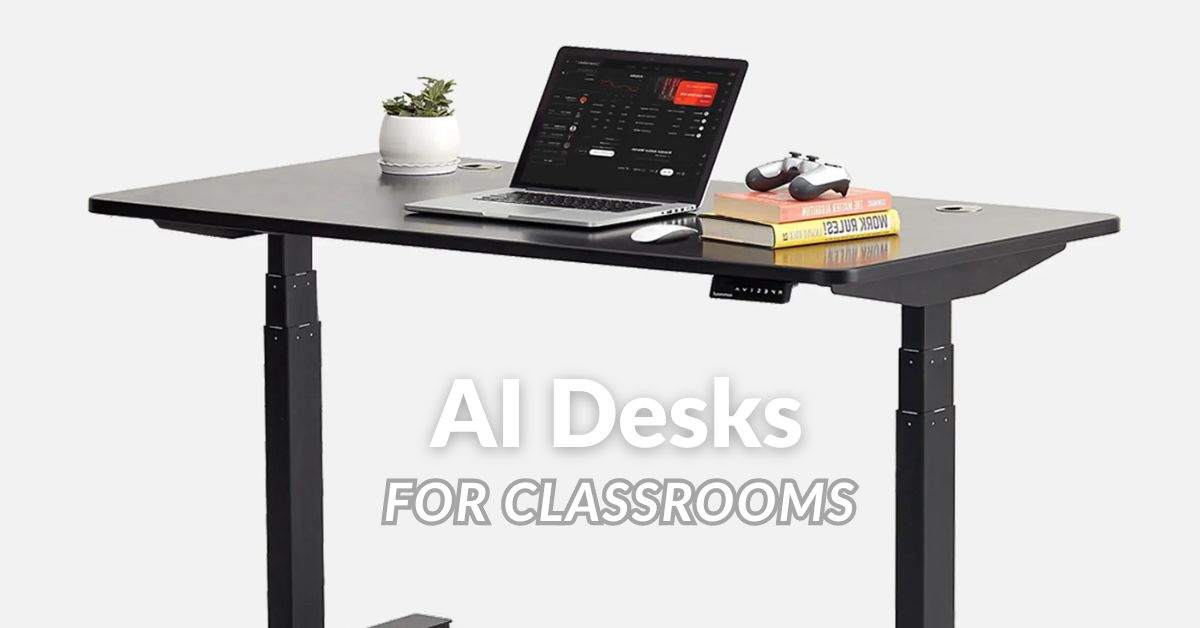
Making a classroom smart isn’t just about using artificial intelligence in teaching; it also involves focusing on the desks. Yes, I’m talking about AI desks.
These days, AI has become so advanced that students sitting at their desks in a classroom won’t need a notebook, a pen, or even a teacher.
So, let’s explore what kind of best AI desks we can use to make an AI class even more advanced.
Best Types of AI Desks For Classrooms
1. AI-Optimized Ergonomic Desks For Students
AI-Optimized Ergonomic desks in classrooms can significantly help improve students’ posture and make it more comfortable for them to sit and study for long periods.
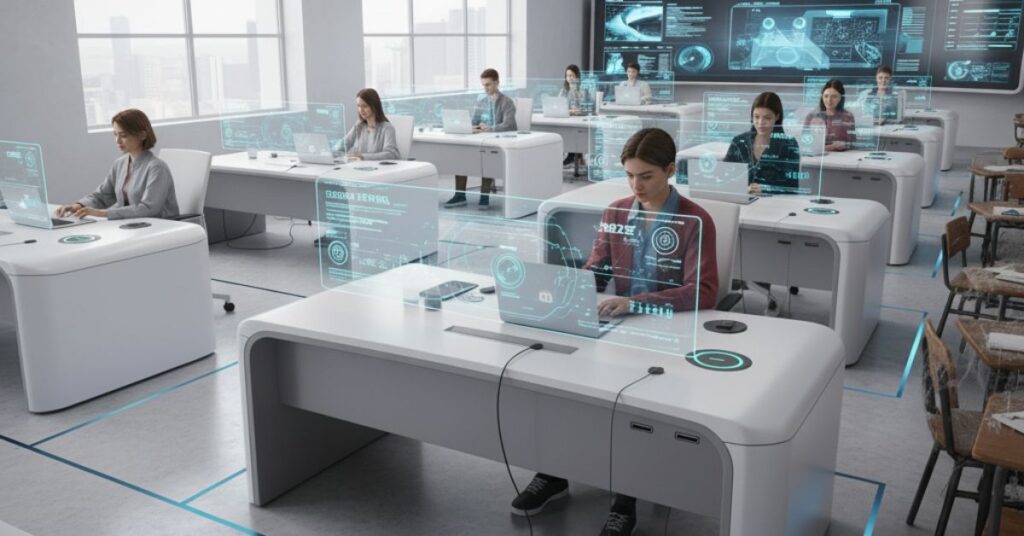
In our time, we had wooden desks where sitting for 5-6 hours would cause back stiffness and neck pain. These new desks will change how students sit using sensors, and they will automatically adjust their height and tilt according to the student.
Additionally, these desks can be customized with several features, such as:
- Charging ports for mobile phones and laptops: With charging ports directly in the desks, students don’t need to scramble around looking for an outlet to charge their devices. It’s a convenient solution that saves time and hassle. Even when I was doing my B. Tech, we had to go sit near a charging port outside the classroom to charge our laptops and phones. So, this is definitely a great improvement.
(Note: These features are not included with the desk by default and must be added through separate customization.)2. Smart and Adaptive Desks: For specific lesson modes
Smart and Adaptive desks are similar to AI-Optimized Ergonomic Desks, but with a key difference: they use smart sensors and memory to adjust height and tilt. This allow a single desk to automatically adjust for different users based on their stored data.
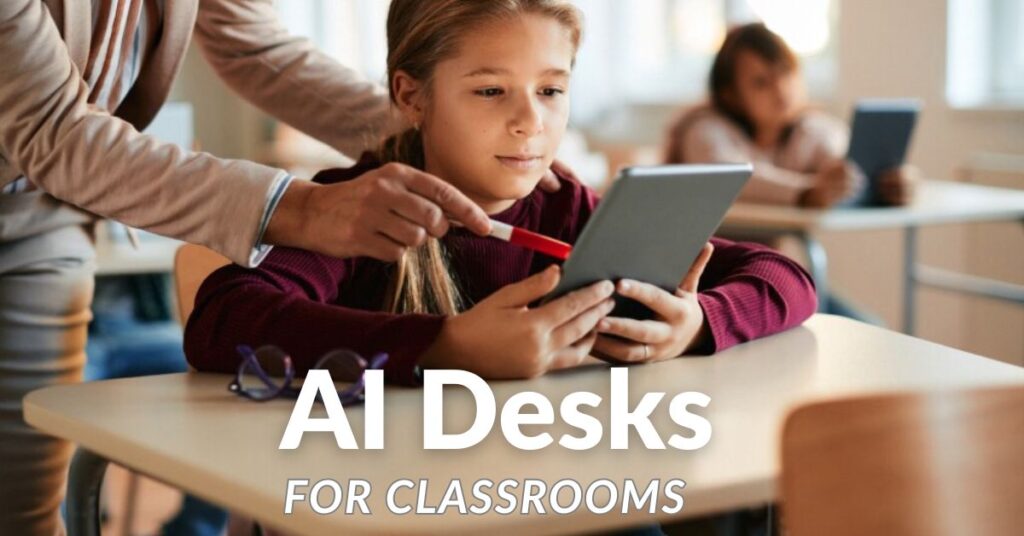
These ergonomic desks helps to correct a child’s poor spinal posture and reduce strain by alleviating problems like back and neck pain, inflexibility, and fatigue. Additionally, they play an important role in protecting children’s eyes by providing correct screen adjustment.
According to Wake Forest Pediatrics, proper posture greatly aids a child’s brain development and helps improve concentration. This is why, in our school days, we had straight wooden benches that kept our spines straight, although they weren’t comfortable. But Smart and Adaptive desks take care of a child’s health while also providing comfort.
3. Interactive Digital Desks
As the name suggests, these desks are designed for interaction, featuring a 4K Ultra HD touchscreen. Students can write and read on this screen. Additionally, the screen can connect wirelessly to laptops, tablets, and the classroom’s main interactive display (whiteboard), making it easy for teachers to lead lessons.
There are often mischievous children in small classes. Because of this, the screens of Interactive Digital Desks are made with toughened glass that has rounded corners. Kids can be so mischievous—in our time, when they didn’t feel like attending a lecture, they would make the chalk boxes disappear. This is why these desks are built with great care.
4. Collaborative Group Desks
These desks are designed for group activities in schools and colleges. They are ideal for group discussions, project work, and seminars. Because they are lightweight, they can be easily aranged anywhere. They come in various shapes, such as trapezoid, hexagonal, L-Shaped Cluster, and arch, which allows students to sit face-to-face during activities like PDP classes and group discussions.
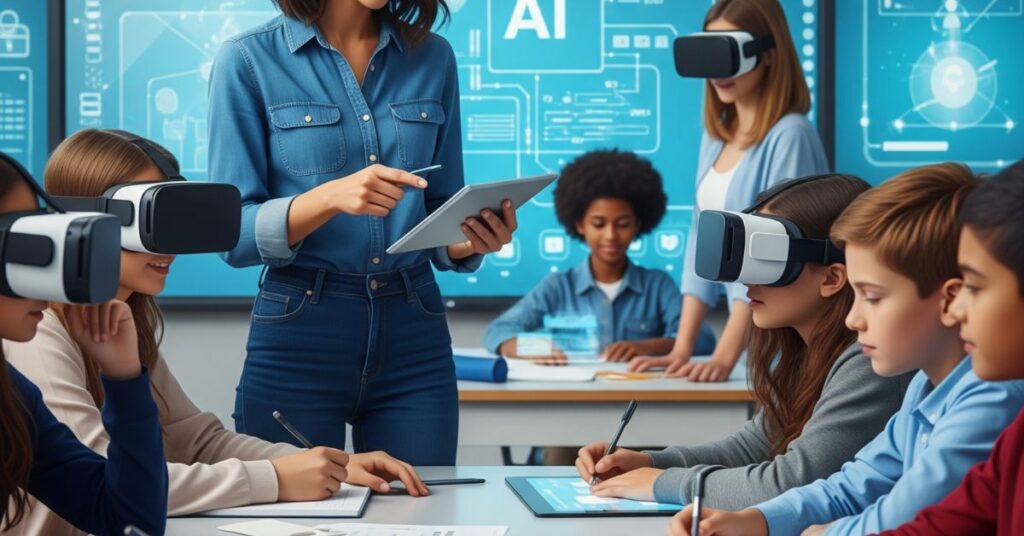
Teachers can also monitor each group and assign tasks using the built-in sensors and displays on the desks. In our time, we didn’t have these kinds of desks, so we faced problems with space for our laptops and having two or three students work together on a single seat. These desks solve that problem.
5. AI-Integrated Student Chairs/Benches
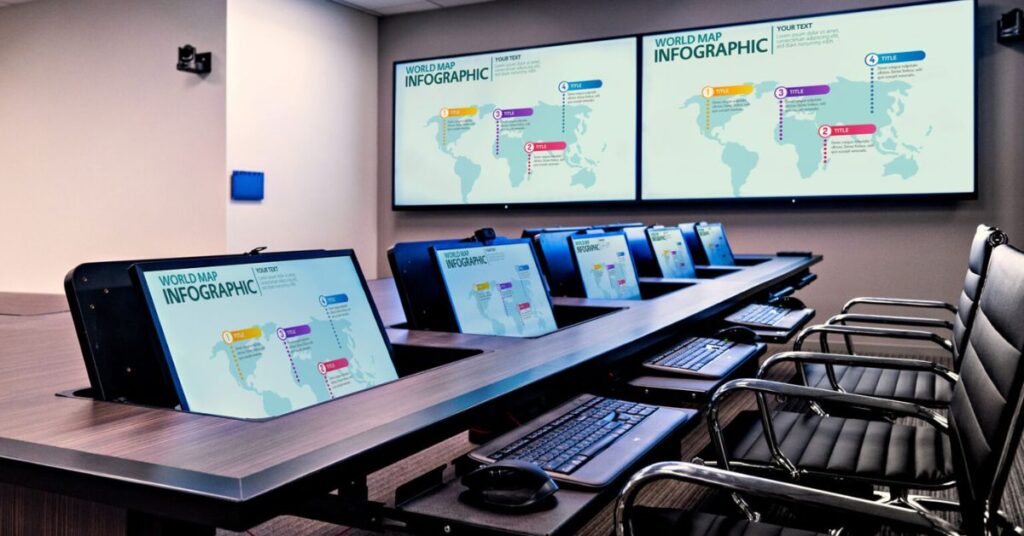
This desk and bench setup uses AI to track everything from a student’s siting habits to their in-class behavior and academics. It can generate reports that are sent to teachers and parents. This helps improve a child’s performance and concentration in class.
6. Library & Research Desks
In schools, colleges, and libraries, librarians often struggle with manual book management. It’s a real headache. Sometimes, after books are issued, students lose or damage them, causing a loss for the library. Additionally, old desks in libraries can get noisy, disrupting the quiet atmosphere.

This is where the Library & Research Desk is emerging as a true hero for schools and libraries. It can manage both digital and physical libraries. The desk is equiped with AI technologies like AI-powered book search and checkout, smart recommendation systems, AR-enabled book racks, and virtual assistants/chatbots.
With the help of these desks, a book issued to any student or researcher can be instantly added to the library’s database. This system uses digital organization and real-time tracking (RFID/IoT) to trac the book’s location, issue, and return status within minutes. This significantly reduces the chances of books being stolen or lost and makes them easy to track.
According to the RFID Journal, “The Jefferson County Public Library (Lakewood, Colorado) saw an increase of about 40% in the speed of book checkouts by using RFID-enabled systems. This has reduced the pressure on their staff.”
Conclusion:
I have listed these six smart desks that may be used in schools and colleges in the coming years. As AI becomes more involved, classroom furnture will evolve beyond just wood and metal, becoming supportive and intelligent for children.
These AI desks, along with new smart methods like – **AI teachers** and **classrooms with smart AI features**, like – AI Video Games will makes learning easier, more personalized, and effective. This will enable children to make full use of this technology in the future.

Sachin Sharma is a Tech AI Writer and Chief Editor at N4GM.com, simplifying how AI is transforming education and smart learning since 2019. With deep SEO expertise, he delivers reliable insights on AI learning tools and EdTech trends, helping students and educators navigate the future of technology.