List of AI Teachers in the World?
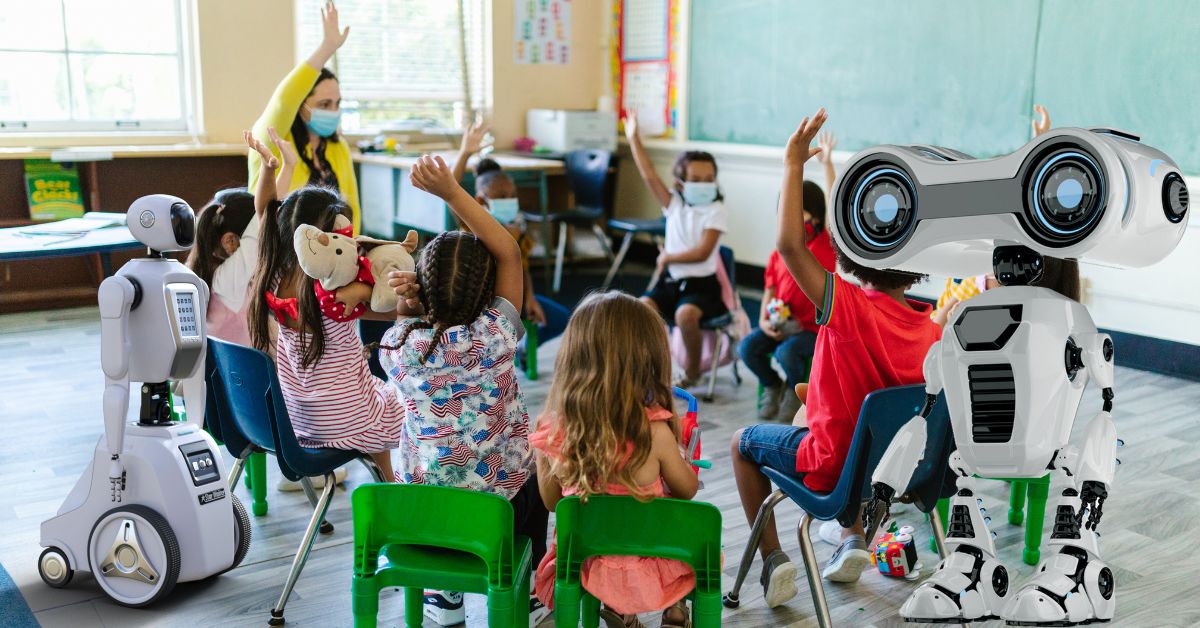
As we discussed in our earlier post about the necessary equipments for an AI classroom, in this post, we’ll learn about which AI teachers in the world can physically teach in a classroom.
Here is a list of AI teachers:
1. Iris (India)
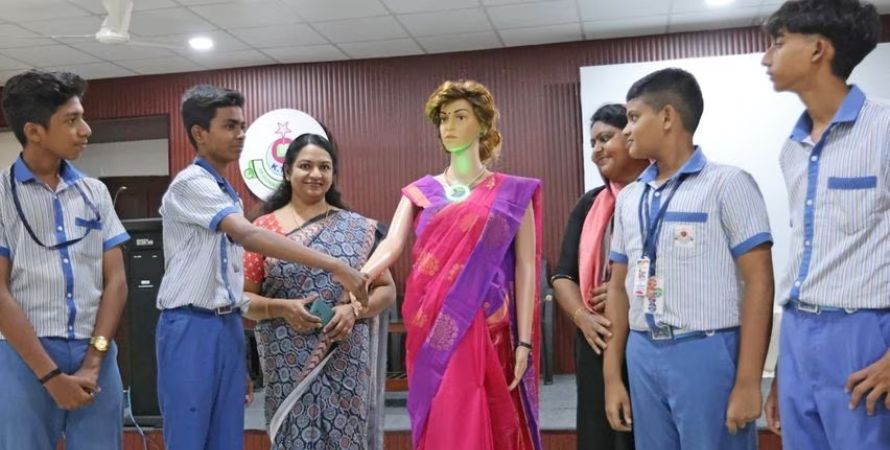
Iris is India’s first AI humanoid teacher, created by Makerlabs Edutech. It was developed under **Project NITI Aayog** with the aim of teaching students from nursery to 12th grade. Iris is currently working at KTCT Higher Secondary School in Thiruvananthapuram, Kerala.
Using generative AI and machine learning, she understands the questions asked by children. She then uses natural language processing to provide voice-based answers. A speaker on its back is used for outputting, and a microphone in her necklace helps to understand the children’s questions.
Using a personalized learning approach with quizzes, games, and interactive activities, Iris is capable of teaching a variety of subjects. She can teach nursery-level rhymes to pre-schoolers and subjects like Science, Math, and English to students from grades 1 to 12. She can do this in over 20 languages, including Hindi, English, and Malayalam.
2. Shalu Robot (India)

Shalu, a robot teacher at the Kendriya Vidyalaya in IIT Bombay, teaches six subjects—Math, Science, Geography, History, and General Knowledge—to students from grades 6 to 11.
It’s capable of communicating in 47 languages – including Hindi, English, and Marathi, and 38 other foreign languages. This robot teacher can upload curriculum files and teach using projection tools like PowerPoint presentations.
This AI teacher is quite popular among children for its social and emotional expresions, such as shaking hands, smiling, and showing anger. It can also provide real-time information on weather, horoscopes, and news by using open-source libraries like TensorFlow and NLTK.
3. Pepper
SoftBank Robotics launched the **Pepper AI robot teacher** in 2014. It is used at Priory Woods School in the UK and Shibuya Elementary School in Japan. The robot began to be used in Japanese schools in 2015 and in the UK, Europe, and the UAE in 2018.
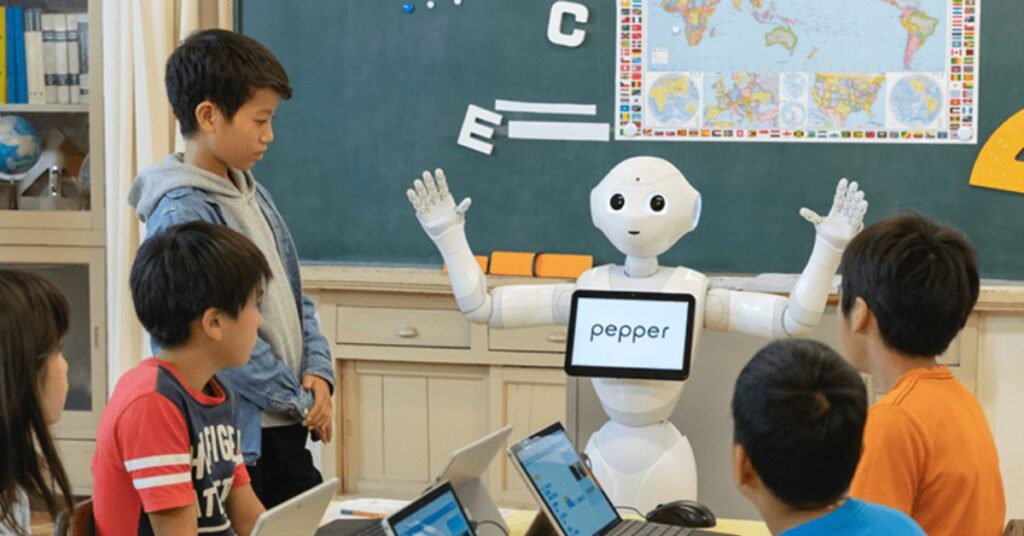
Although this robot can easily teach most subjects—science, technology, engineering, and mathematics—it is particularly useful for teaching basic education like 1, 2, 3, and A, B, C, D to young children (kindergaten and nursery) through games, stories, and rhymes. This is because its **10.1-inch touchscreen tablet,** located on its chest, is perfect for leting small children play games and learn to identify things with sounds.
Using an HD camera and shape recognition software, it understands a child’s facial expressions, emotions, manner of speech, and voice tone to determine if the child has understod the topic. This is helpful in improving each child’s personalized learning. A regular teacher, on the other hand, finds it difficult to figure out which students in a class have not understood the topic properly.
| Key Feature | Details |
|---|---|
| Speech & Language Recognition | Supports 15+ languages with AI-powered natural conversation. |
| Face & Emotion Recognition | HD cameras and software to detect faces, gestures, and emotions. |
| Object Recognition | Identifies and distinguishes objects in its environment. |
| Tablet Interface | 10.1″ touchscreen on the chest for presentations, quizzes, and games. |
| Tactile Sensors | Sensors in head, hands, and chest for interactive responses. |
| Battery Life | 30Ah lithium-ion battery lasting 10–12 hours. |
| Navigation | Omnidirectional wheels with lasers, infrared, and ultrasonic sensors for safe movement. |
| Emotion Engine | Analyzes voice tone and facial cues to respond emotionally. |
| Programming | Compatible with Python, C++, Java, JavaScript, ROS, Choregraphe, and Pepper SDK. |
| Construction | 120 cm tall, 28 kg, with 19 Degrees of Freedom and 20 DC motors for smooth, human-like movement. |
4. Keeko
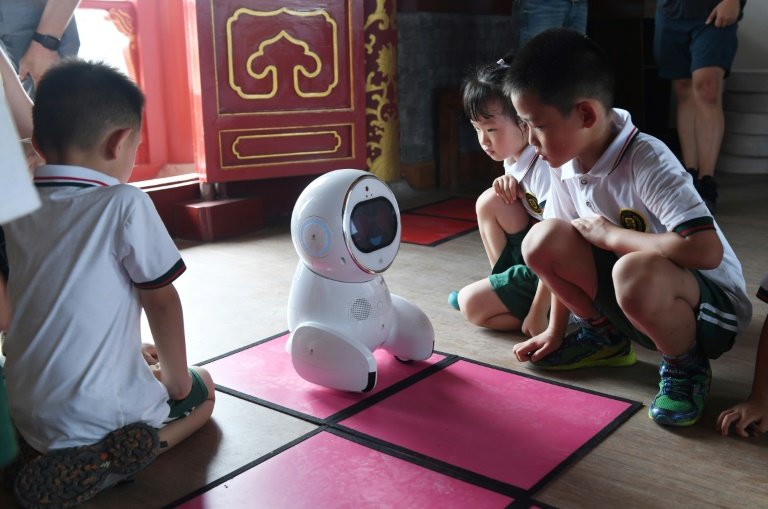
Keeko is an AI robot used in kindergartens in China. It currently operates in around 600 schools across the country. It helps in teaching young children by telling them stories, helping them memorize rhymes, and playing games and quizzes.
When children give a correct answer while learning spellings or other information, Keeko responds with heart-shaped eyes. This positive feedback encourages children to stay excited about learning.
Keeko functions as an assistant teacher. Teachers can update what they want to teach in Keeko’s memory, and the robot then teaches those pre-fed tasks to the children.
5. Bina48 (USA)
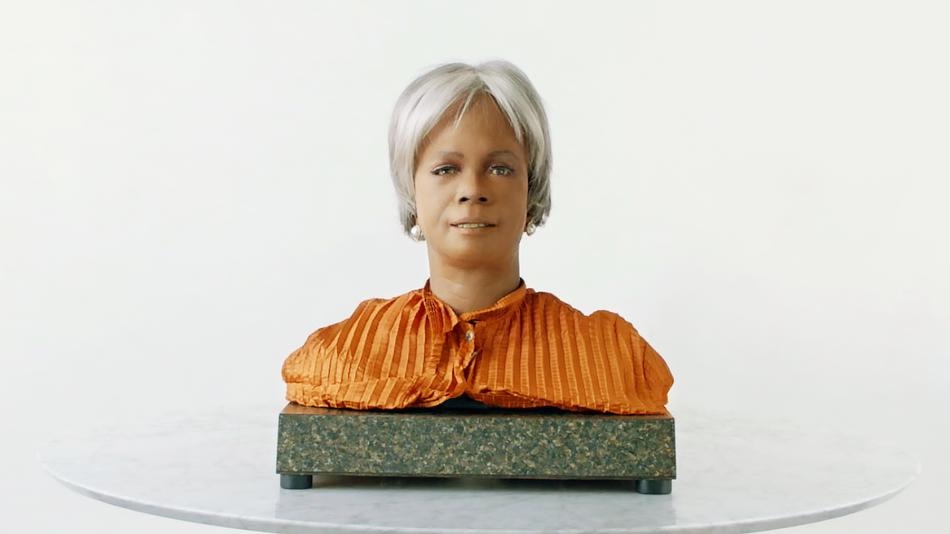
BINA48 is an advanced AI robot teacher that can recognize the faces and voices of its students. This allows it to interact with children like a real teacher in the classroom. It can also express 64 different emotional behaviors.
The robot is capable of teaching by gathering information from the internet and can engage in in-depth discussions with students on various topics.
This AI teacher has no legs, so it’s placed on a desk. If it were placed on a smart AI desk, their combination would be futuristic for the classroom.

Sachin Sharma is a Tech AI Writer and Chief Editor at N4GM.com, simplifying how AI is transforming education and smart learning since 2019. With deep SEO expertise, he delivers reliable insights on AI learning tools and EdTech trends, helping students and educators navigate the future of technology.