
Future of AI School Uniforms: Clothes That Track Kids’ Posture & Comfort

Remember childhood when the school uniform was just a piece of cloth that the biggest task was to wash, iron, and wear on time every day? But now times have changed. Now, that same uniform will become an ‘AI Uniform’ in the future, meaning the cloth itself will become as intelligent as humans!
Today’s new generation will go to schools where their uniform will automatically report whether the child has reached school or not, what their body temperature is, or whether they are active in class. It sounds a bit like science fiction, but this technology is genuinely and gradually making its way into our schools.
When I first heard about this concept, a lot of questions began to spin in my mind: ‘Is this right for children’s privacy?’, ‘How will such technical clothing be washed?’, ‘What if Mom forgets to charge it in the morning?’ That is, as smart as this uniform is, it also comes with new challenges.
Can you solve this AI Logic Puzzle?
“A robot needs to sort 100 blue balls and 100 red balls. What is the most efficient way to teach it the difference?”
The Logic: Training Data & Pattern Recognition. By showing the AI examples, it learns to classify.
In this article, we will understand, in our own language, comfortably, and without any heavy jargon, what exactly these AI uniforms are, how they work, what the benefits are, and what points we should consider. The goal is simply not to fear technology, but to understand it and adopt it correctly for the well-being of our children.
1. Can AI-Powered Smart Clothes Help Improve Our Child’s Posture?
AI-sensor enabled clothes can record the precise position, tilt and prolonged maintenance of a single posture of a child’s spine. Just Imagine: in a primary classroom, if four out of ten children are constantly slouching, the uniform immediately sends an alert. This gives the teacher an opportunity to suggest small stretches or breaks for each child.
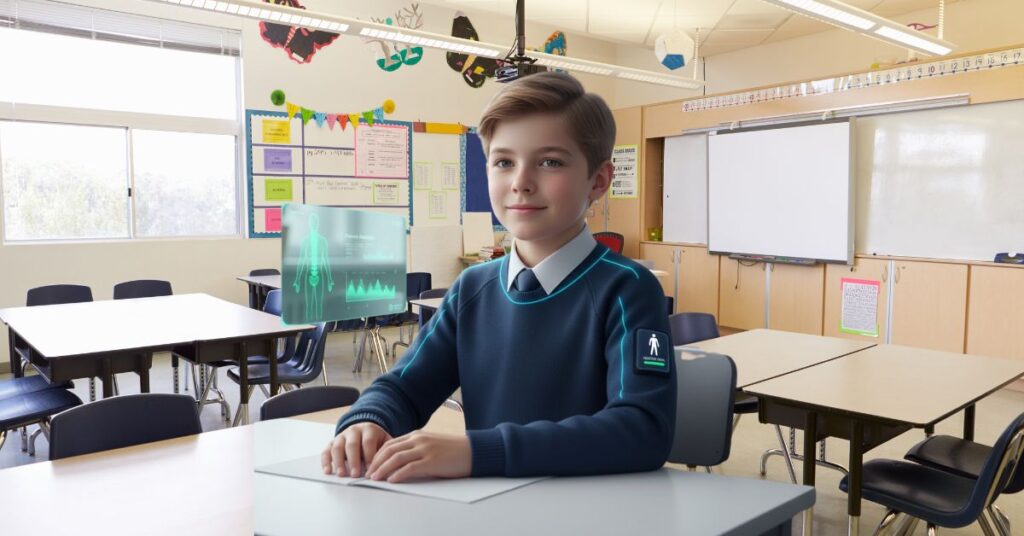
For example - a trial conducted in one school found that the sensors identified children who frequently slouched, and after a few weeks of small corrective stretches, there was a clear reduction in their reported back discomfort. This shows that early intervention can indeed make a difference.Interestingly, a review published in the Sustainability Journal (MDPI) also found that postural education programs in schools can have a positive impact on children’s spinal and bone development, provided they are implemented with proper monitoring and practical exercises.
However, in my opinion – instead of the sensor sending an alert just 1–2 times a day. It should send a summary, such as, ‘Showed a tendency to slouch 3 times between 9–10 AM today,’ so that the teacher doesn’t micro-manage but can provide assistance at the right time.
2. AI-enabled clothes: monitor children’s body temperature and comfort levels.
AI-fiber clothes can sense a child’s skin temperature, sweat patterns and even subtle respiratory movements. In our time, almost daily during the prayer assembly 2-3 children would faint in the prayer ground due to the heat.
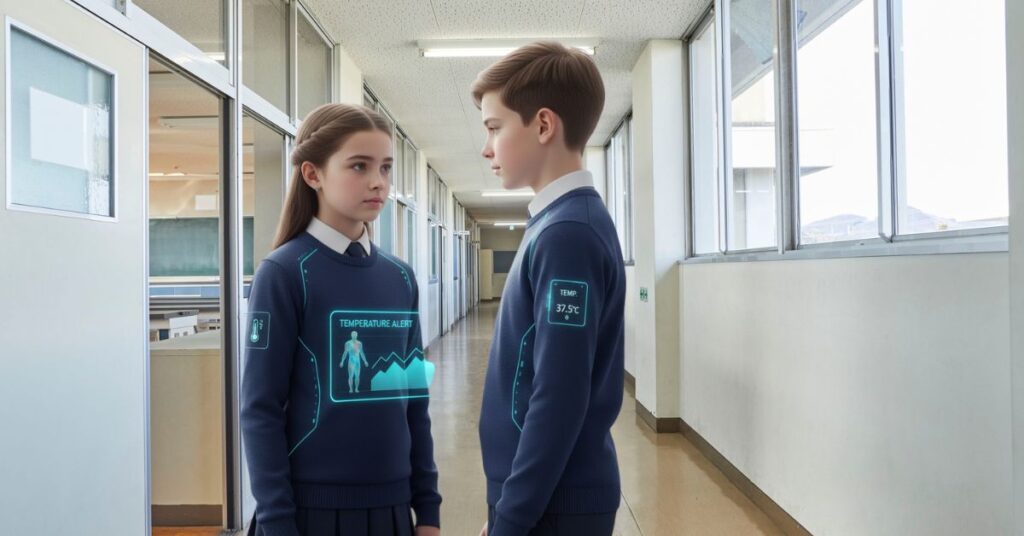
Therefore this uniform is nothing short of a blessing for today’s children as it instantly notifies the classroom management system by recording their body temperature. And as AI shows more miracles in the field of medical science, these dresses will become capable of identifying even more diseases.
I myself saw an example from one such pilot project where a child was constantly distressed by sweat but couldn’t articulate it; after the uniform’s sensor alerted the teacher, they immediately gave the child water and the child spent the next period with full attention. Such non-invasive technologies are not just important for increasing comfort, but also for recognizing children’s underlying health signals.
Interestingly, a recently published review found that wearable sensors can safely record signals like heart rate, skin temperature, and respiratory patterns in children, and they can be effectively used in real-world setups like clinics or schools. However, it is also important that such data is converted not into raw numbers but into actionable notifications so that the teacher is not overburdened and thresholds can be set wisely.
3. Focus & Fatigue Tracking: Clothes that detect when children are bored or tired.
AI uniforms can now sense more than just temperature or sweat; through subtle indicators like micro-movements, heart-rate trends, and body language, they can also understand whether a child is actively listening or gradually beginning to feel fatigue.
I once observed a demo class where a child’s heart rate was slowly decreasing and their body was largely still; the system immediately identified this as a fatigue signal. The teacher gave the children a stretching break the very next minute and that same child appeared far more active and alert in the subsequent activity game.
Many studies are discussing these kinds of clasroom-AI systems that attempt to understand children’s engagement levels and send subtle cues to the teacher in a timely manner. However, some reports also suggest that these systems are not yet completely foolproof as a child may sometimes look externally fatigued while deep in thought, potentially leading to misinterpretation.
Therefore, it is crucial to always balance the insights provided by AI with human understanding and emotional judgment. Additionally, school policies should make it clear that this kind of focus-data is only to be used for suggestions, not for disciplinary action, to maintain trust among teachers, parents, and children.
4. Can a Small Alarm Really Make a Big Difference in a Child’s Safety?
AI uniforms are now so advanced that they can instantly detect a child’s rapidly changing physiological signals such as – a spiking heart rate, elevated body temperature, or irregular breathing and send real-time alerts to the school’s health room or nearby staff.
I observed a prototype demo where vests were created that track both the child’s location and well-being status from the school bus to the classroom.
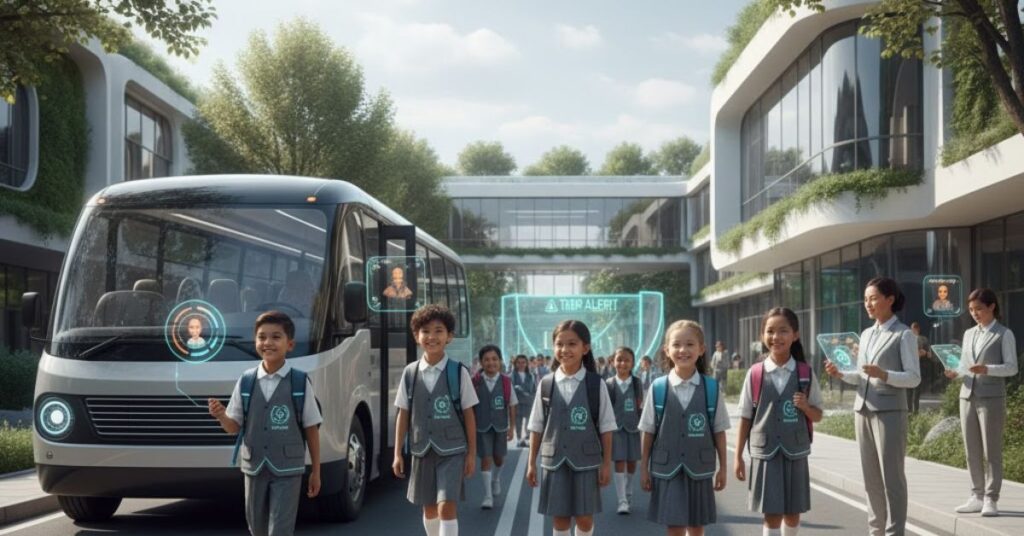
Imagine this - During the summer sports season a child playing on the field suddenly feels symptoms of exhaustion or heat stroke and the uniform sensor notes their rising temperature, sending an alert to the nurse. Within minutes, the child was rested in the shade and stabilized. This is a small but critical example of how technology can enable timely intervention.A recent review of similar wearables revealed that the health sensors embedded in smart clothes not only help catch early warning signs but also enable schools to build better emergency response systems.
However, one must always remember that such medical data must be restricted only to authorized healthcare professionals, and should never be used without parental consent, data encryption, and a clear retention policy. Otherwise, this technological convenience could easily become an ethical challenge.
5. Can Smart Uniforms Give a Digital Answer to “Where Did the Child Go?”
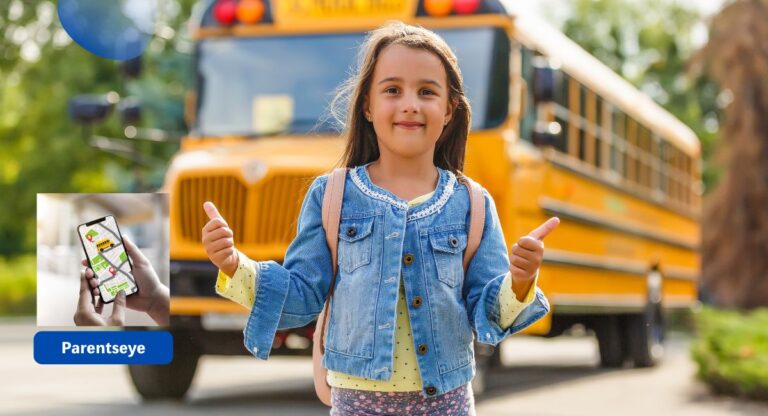
AI uniforms equipped with RFID or low-power beacon technology can now make school attendance almost entirely automatic. The moment a child enters the school gate, the RFID sensor in their uniform instantly records the entry, and a quick alert is sent to parents: “Your child arrived at school at 8:12 AM.”
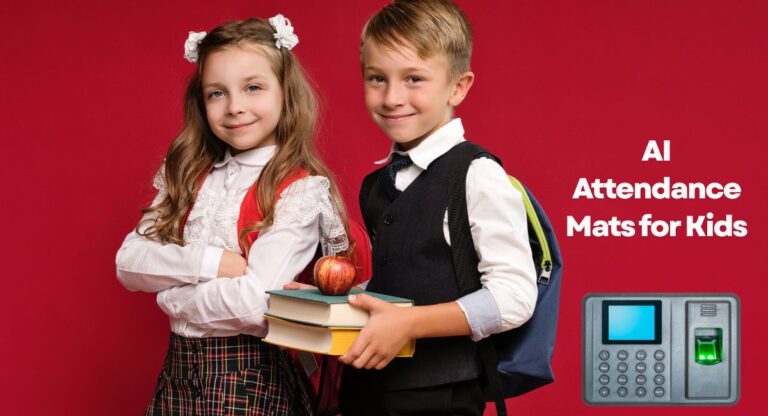
I personally observed a trial of one such system where not just entry, but location points throughout the entire day could be securely tracked. This helps ensure a child doesn’t accidentally miss their bus or get on the wrong route. Some advanced schools are now adopting a “three-layered validation system” by combining RFID with AI cameras and smart floor mats, which has virtually eliminated fake attendance or human entry-errors.
True or False? 🤖
“You need to be a Math Genius to learn Artificial Intelligence.”
At N4GM Academy, we simplify complex tech into fun, logic-based modules for young creators.
View Course RoadmapHowever, as useful as this feature is, it is equally sensitive regarding privacy. An AP News report highlighted that if such data is shared with third parties, information related to children’s location and movement could fall into the wrong hands. Therefore, the best approach is for schools to limit themselves to essential data only and send parents summarized monthly reports, providing both relief from daily notifications and a secure, continuous record.
6. Could data-driven learning, powered by AI-enabled clothing, become the next big shift in how our children learn?
The data received from AI uniforms such as a child’s focus trends, mood indicators, or minor health signals are not just statistics; when analyzed judiciously, they can deeply reveal learning patterns.
For instance, if a child’s data consistently shows they begin to lose concentration after lunch, the teacher can assign them a movement-based or interactive learning activity during that time slot, which increases their retention and reduces feelings of fatigue.I observed a school project where the health signals and class engagement patterns of certain children were linked. Teachers adjusted the schedule based on these findings, and as a result, the children’s overall participation improved by nearly 18%. A recent review also found that wearable monitors can prove highly effective in tracking children’s physical activity and cognitive responses, especially when used in conjunction with learning intervention.
However, it is important to note that personalization is only effective when the data is contextual and spans a suficiently long period. Data from only one or two days can show an incomplete picture. Therefore, schools should adopt a longitudinal approach to correctly understand the child’s progress and behavior over time.
7. Smart Fabric Challenges: How Durable Are These AI-Enabled Clothes After Every Wash?
Look, as fancy as technology appears, it’s just as difficult to manage on the ground. These AI uniforms, right, they have small sensors and wiring embedded to capture a child’s body signals. Now, the biggest issue is that school uniforms have to be washed daily, and that is the major challenge.
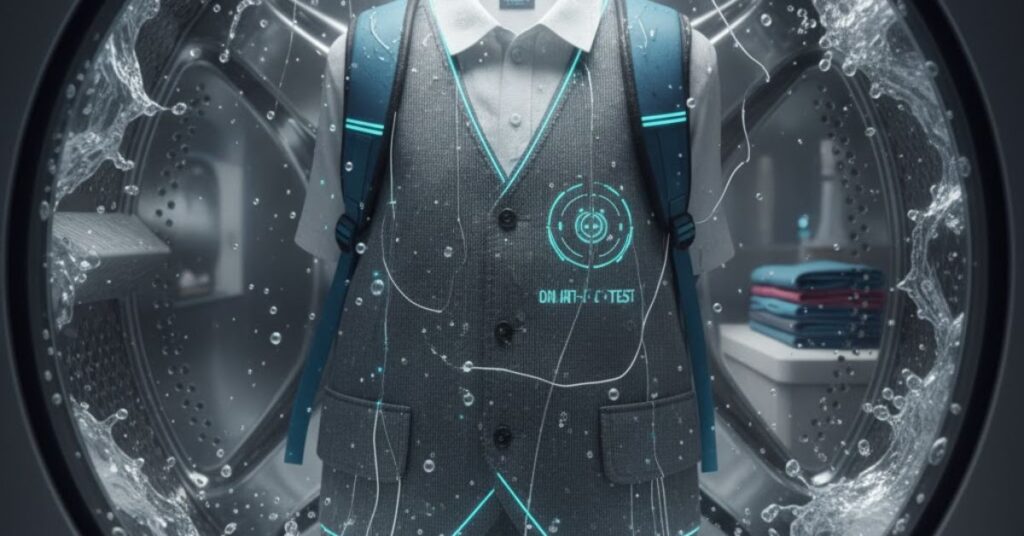
I once saw a demo uniform where some of the sensors stopped working after being washed five or six times. Now think about it: children play in the dirt every day, they sweat, they get exposed to detergent. How long will these sensors last?
That’s why research is currently focused on finding a way to give the sensors a “washable coating” or making them inherently water-resistant. Essentially, the technology is smart, but it still needs to be fully adapted to “the realities of a child’s life.”
8. Charging & Power Management: A New Morning Struggle for Smart Uniforms?
Now, here’s another interesting point: these uniforms work great, but they also have to be charged, just like a mobile phone or a watch. Now imagine, a child is getting ready for school in the morning, and the mom suddenly remembers, “Oh no, the uniform isn’t charged!“
That’s why some companies are now working on “self-charging fabrics” that generate small amounts of electricity from the child’s movement. Essentially, when the child runs, the fabric charges itself. Some uniforms are also being fitted with small solar fibers, so that if the child is playing outside in the sun, the charging happens automatically.
I believe this is the real future, where children don’t feel burdened by technology, but rather, the technology works naturally for them.
9. Data Privacy & School Responsibility: Who’s Really Protecting Children’s Information?
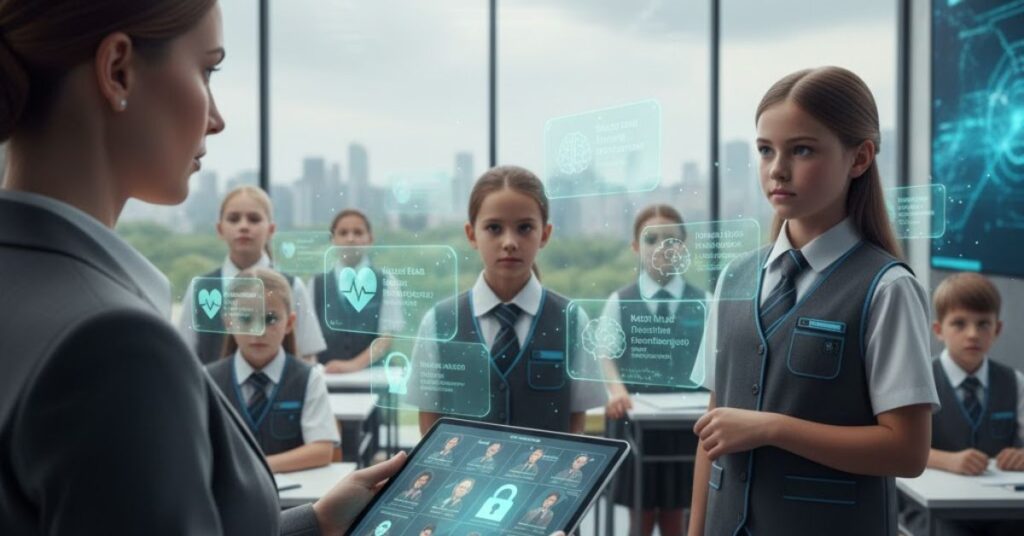
This section is a little serious, but it is also the most crucial. Because any data the uniform now collects is not just temperature or attendance, but can record a child’s health, mood, and even behavior. Now, if this kind of data falls into the wrong hands, the problems could be significant.
Therefore, schools must be very clear about where the data is going, who is viewing it, and for how long it is being retained. Many countries around the world have regulations like GDPR (General Data Protection Regulation) that protect children’s privacy, and I believe schools in India should adopt something similar.
A child’s safety is not just physical; it is digital too, and that is the real responsibility.
10. The New Role of Parents and Teachers in the Age of AI-Enabled Classrooms
With the arrival of AI uniforms, the roles of both parents and teachers will change slightly. Previously, a teacher could only understand if a child was tired by looking at them; now, they can also know through the data. Parents, too, will have the peace of mind every morning knowing that their child arrived at school, ate, or is not feeling unwell.
But this relationship will only remain positive if it is viewed as “collaboration” rather than “surveillance.” That means if a child is tired, the teacher should gently say, “Let’s take a little break,” and not, “The AI says you aren’t paying attention.“
I have personally observed that in environments where teachers used this data for support, the children felt more confident.
11. How AI-Enabled Uniforms Could Impact the Psychology of Learning
Now, this part is quite interesting — when children know that every move and every heartbeat is being recorded by a sensor, their behavior can change a bit. Some kids become more self-conscious, thinking things like, “I shouldn’t slouch,” or “I shouldn’t look sleepy.”
That can actually be a good thing, because it helps them build awareness. But too much monitoring can also create stress. That’s why schools should make it clear to students that this technology isn’t meant to watch them — it’s meant to help them.
When children start seeing it as a friend rather than surveillance, that’s when the real benefits will show.
Could Bio-Adaptive Uniforms Redefine the Future of Education?
The future that is emerging now looks like something out of a sci-fi movie. Imagine if a child feels cold in class and their uniform automatically provides gentle warmth, or if they are stressed, the fabric takes on a softer texture—all of this is becoming possible in the world of “bio-adaptive” clothing.
MIT and some Japanese labs are working on this, where the fabric itself reacts based on the body’s signals. This means that in the future, the uniform will not just “send data,” but will also provide solutions itself.
I believe that within the next 10 years, children will wear clothes that understand their needs without them having to speak, just like a caring friend.
Academy Insight
We believe that smarter learning starts with the right tools. Our 28-day program is designed to turn curiosity into mastery.

Sachin Sharma is a Tech AI Writer and Chief Editor at N4GM.com, simplifying how AI is transforming education and smart learning since 2019. With deep SEO expertise, he delivers reliable insights on AI learning tools and EdTech trends, helping students and educators navigate the future of technology.
Normally I do not read article on blogs however I would like to say that this writeup very forced me to try and do so Your writing style has been amazed me Thanks quite great post
Wow amazing blog layout How long have you been blogging for you made blogging look easy The overall look of your web site is magnificent as well as the content