How to Monitor Your Child’s Use of AI Homework Helpers Without Pressure?
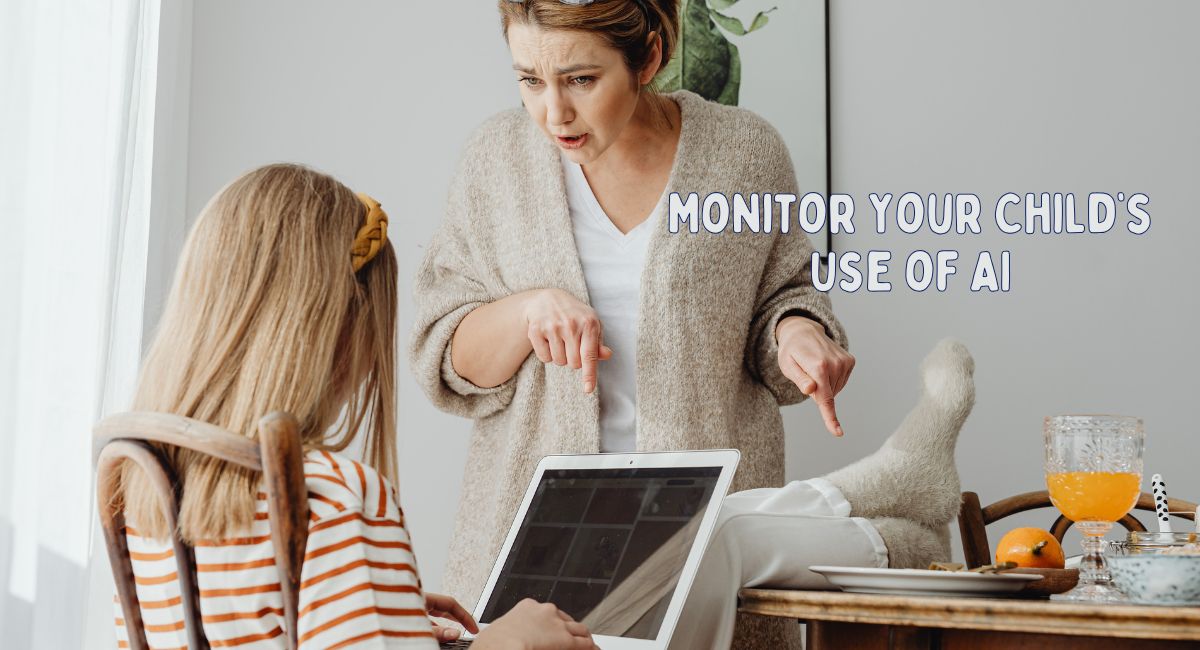
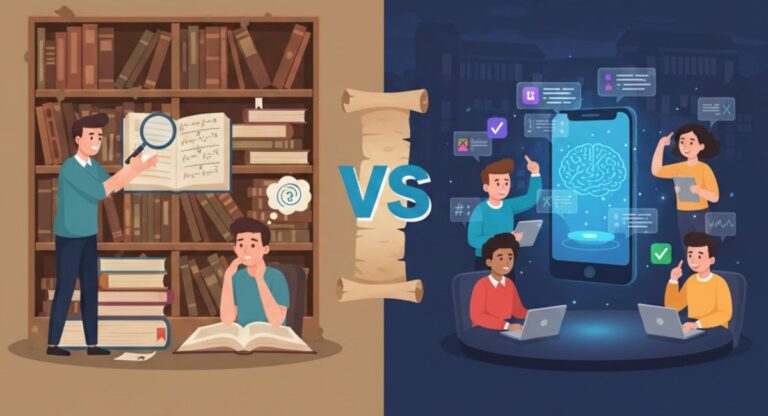
These days, children learn not only from books but also from screens. Often they start using AI tools like ChatGPT, Google Gemini, or others for homework help. This is good if used wisely.
According to a recent report (UNICEF, 2024) – nearly 6 out of 10 children now use some form of AI tool for their school assignments — more than half of whom believe it “makes learning easier,” but parents feel it might reduce the “habit of thinking for themselves.”
Therefore as parents, we must ensure that this “help” doesn’t turn into “dependency.” So, the question arises: How do we monitor, without instilling fear or pressure? Let’s understand this with simple and practical examples.
1. Open Communication and Understanding – Resolve Issues by Understanding, Not Suppressing
Nowadays, children extensively use AI tools like ChatGPT or Google Gemini for their studies, and this is fine as long as they use them wisely.
For instance, one day my daughter was doing her math homework—Profit and Loss questions. She did all of them with the help of AI and told me, ‘I asked ChatGPT, and it’s all done.’ I didn’t get angry; I just smiled and said, ‘Okay, now explain to me how you did it.’
So, during one sum, she incorrectly explained the formula— C.P.= underroot (S.P.1×S.P.2) —and got stuck mid-way. I then explained that seeking help from AI is not wrong, but understanding every answer is crucial.
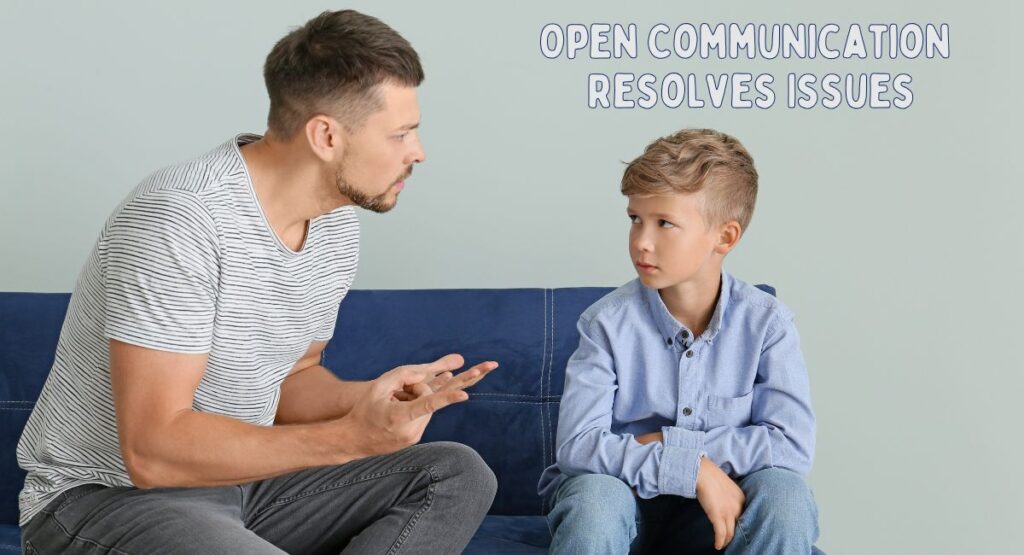
This kind of open communication helps the child understand that you are with them, not against them, instead of feeling scared.
The 2026 Skill Gap Poll
Which skill will be most valuable for students in the next 5 years?
Little AI Masters™ bridges this gap by merging both worlds.
Learn more about our missionNowadays, most schools are creating specific rules regarding AI tools so that children learn to use them correctly and responsibly. For example, the use of AI for homework or projects should be limited to seeking suggestions or ideas, and not for directly copying the entire answer.
According to TeachAI.org guidelines, a rule being included in many schools for high-school and university-level students is that if a student takes help from AI, they must definitely mention in their work where and how they used it. This helps to instill the habit of ethical AI use in children.
For example, if a child is unable to understand a difficult math problem, AI can explain it to them in simpler language, step-by-step. But there are also disadvantages. If the child consistently takes a direct answer from AI, their ability to think and problem-solve might weaken. Gradually, they lose the habit of putting in their own effort and start looking for shortcuts in every task. Sometimes, AI also provides wrong or incomplete information, which can confuse the child.
Therefore, the most important thing is to teach children to use AI like a ‘helpful friend,’ and not turn it into their ‘thinking brain.
2. Focus on the quality of the work – not the result, recognize the thought process
If you want to know whether your child is thinking for themselve or has become overly dependent on AI it is very important to focus on the quality of their work. While reading your child’s assignment don’t just look to see if the answer is correct; look to see whether their own thought process is reflected in it.
For example - my younger daughter is in UKG (Upper Kindergarten) and she received a class homework to write the names of 10 fruits. She used a tablet and wrote down the spellings from ChatGPT. When I checked it - I was surprised for a moment that she had memorized them but when I asked her the spellings - she could only tell a few. Later, upon questioning she told me the truth about how she did her homework.If your child usually writes in simple and straightforward language, but one day their assignment looks absolutely perfect and professional, it could be a sign that they have taken help from an AI.
At such a time, instead of scolding it is better to explain. Tell them – “Your answer is very beautiful, but I would like you to rewrite it in your own words.” If they are able to do so, it means they have genuinely learned. If they are unable to, it is a sign that they need help.
When they do this not only does their understanding grow but they also learn that true knowledge is what comes from their own mind, not from a screen.
3. Promote Creative Use – Make AI a Tutor, Not a Teacher
Instead of fearing AI, we should learn how to use it like a wise tutor for children.
Just as a teacher doesn’t give a direct answer to every question but explains how to think about it, the use of AI should also be directed toward that same goal.
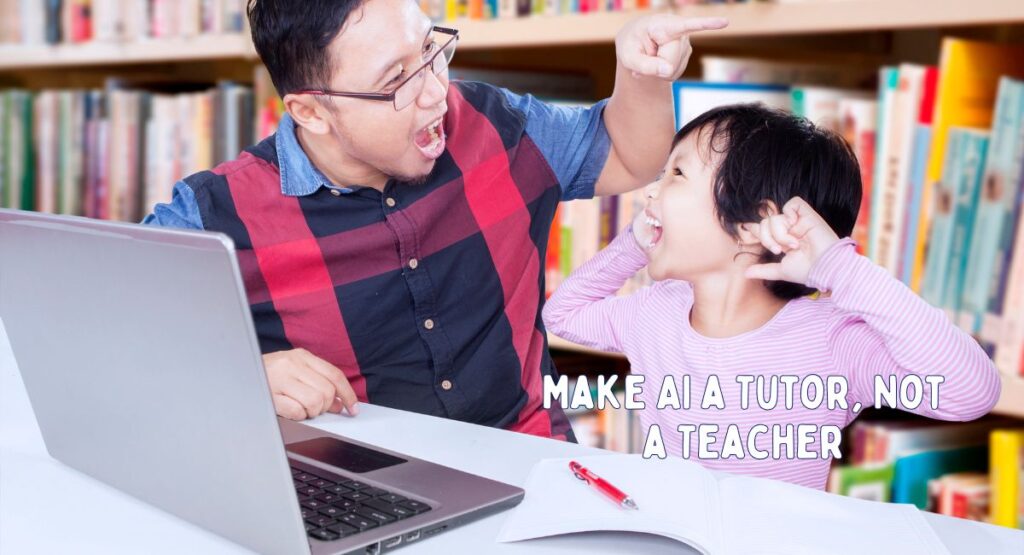
Tell children that if they find a topic difficult such as – “Why was the Mughal rule important in history?” or “How was a specific math formula developed?”, they should ask the AI to explain it in simple language or provide aditional examples. When they ask such questions, their minds open up and their curiosity to learn grows.
Once, my elder daughter was struggling to understand the science topic of "How birds fly in the air," so I told her, "Don't ask for a direct answer, ask how the science behind it works."She did this and then prepared notes in her own words. This not only helped her understand the concept but also improved her writing skills. This method is the most effective – first understand, then rewrite in your own words.
Also, occasionaly sit with them and observe how they are using the AI. When children see that their parents are learning alongside them, a sense of responsibility develops in them. This approach not only teaches them the smart use of AI but also helps them understand that true learning is what passes through the mind and settles in the heart, not just what is written on the screen.
4. Technical Monitoring (to a limited extent) – Trust, but also keep an eye
Today, children have so much technology that it is impossible to directly monitor everything. However, some technical supervision can be done without showing distrust.
I made a rule in my home: “Everyone’s screen time will be open.” This means that when we sit together as a family, everyone can see who used which app for how long. This makes the child feel that the rule is for everyone, not just for them.
If you use parental control apps, inform the child beforehand that this monitoring is for safety, not for spying. This is important because, according to the World Health Organization (WHO) guidelines — “children under 2 years should have absolutely no screen time. For children between 2 and 4 years, a maximum of 1 hour per day, and for children between 5 and 17 years, approximately 2 hours of screen time is considered safe.“
For example, you can look at the weekly reports to see which AI apps the child is spending more time on. But remember, the relationship is more important than the report. If the child shares their thoughts openly with you, that is the most trustworthy form of supervision.
5. Open Dialogue and Trust – Foster Belonging, Not Fear
When talking to your child about AI try to make sure they don’t feel like you are scolding or restricting them, but rather that you genuinely want to listen to what they have to say.
Once, my daughter said – “Papa the AI sometimes gives the wrong answer.” I smiled and asked – “Oh… how did you know it was wrong?” She replied – “Because the book said something else.”
At that moment I understood that she trusts her own mind more than the AI, and that is the real takeaway.
We, too should teach children that making a mistake is not bad, but identifying and correcting it is crucial. When you talk to them openly, they learn to use AI correctly on their own.
6. Emphasize Critical Thinking and Verification – Question Every Answer
In the flood of information, choosing the right thing has now become an art… So it is important to teach the child that blindly accepting every answer given by AI is not right; teach them to keep a little doubt.
Encourage them to ask questions like – “Does this seem true?”, “What does this mean according to you?” I also told my daughter that if she doesn’t feel confident about an answer after reading it, she should double-check it with a book or a teacher.
Now, she confirms every new piece of information first with a book or a trusted person. True critical thinking is precisely this — not just memorizing the answer, but evaluating it, understanding it thoughtfully, and then adopting it.
7. Focus on the Learning Process – The Journey Matters, Not the Outcome
The real joy of learning lies not just in getting the correct answer, but in the effort made along that path. We often forget that mistakes are also a part of learning.
If a child solves a question using AI, ask them – “Now explain it in your own way.” I told my own daughters the same thing—that if she could explain the concept to her younger sister, then I would believe that she truly understood it.
She smiled and said – “So, learning means teaching!” That day I felt that learning is complete when the child starts trusting their own understanding, not the AI.
Finally – Learn to Walk Alongside, Not Just Monitor
Being a parent is not just about making rules for children; it is also about understanding their thoughts and their small world. AI is new for them, but honestly, it is also somewhat new for us.
If we try to understand it together, the child will naturally learn how to use technology correctly. Remember, keeping an eye on a child does not mean controlling them, but rather showing them the right direction with trust.
They learn things that no book can teach only with a little love, a little understanding, and a little patience. Ultimately, our goal is not to stop them, but to give them the freedom to think and understand.
Can you solve this AI Logic Puzzle?
“A robot needs to sort 100 blue balls and 100 red balls. What is the most efficient way to teach it the difference?”
The Logic: Training Data & Pattern Recognition. By showing the AI examples, it learns to classify.

Sachin Sharma is a Tech AI Writer and Chief Editor at N4GM.com, simplifying how AI is transforming education and smart learning since 2019. With deep SEO expertise, he delivers reliable insights on AI learning tools and EdTech trends, helping students and educators navigate the future of technology.