Humans and AI: The Future of Partnership in Business, Education & Creativity
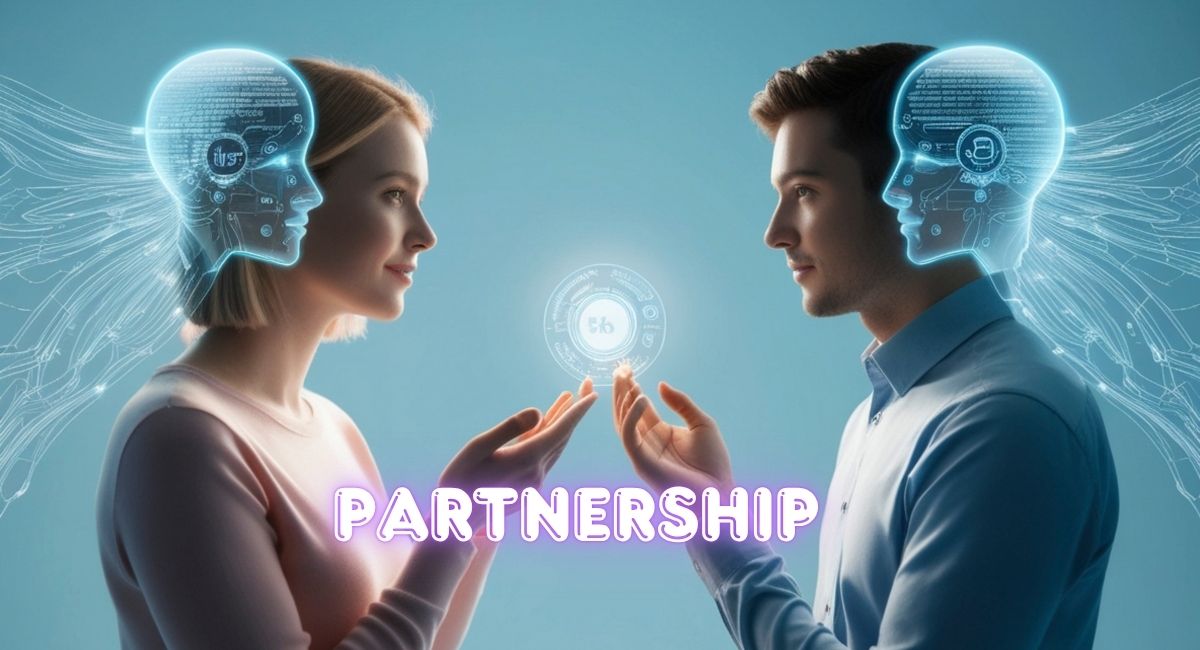
Machines used to simply follow our commands, but now they are learning, thinking, and understanding on their own. AI has become an inseparable part of our lives, sometimes driving cars, sometimes teaching children, and sometimes surprising us by composing music.
What I find most fascinating is that AI isn’t replacing humans; it’s becoming our partner.
The discussion is no longer “machine versus human,” but about “machines and humans collaborating” to build a new world.
Self-Driving Cars: When the Steering Wheel Gave Up Waiting for the Human
I remember, as a child, my dad would always teach me while driving: “Son, driving requires as much patience as it does focus.” Paying attention to every turn, watching every signal, keeping an eye on the movement of cars ahead. But times have changed.
Today, cars think, drive, and handle the steering wheel all by themselves. AI, or Artificial Intelligence, has become the master of the roads. Now cars understand traffic, weather, darkness, light, and even the gait of pedestrians.
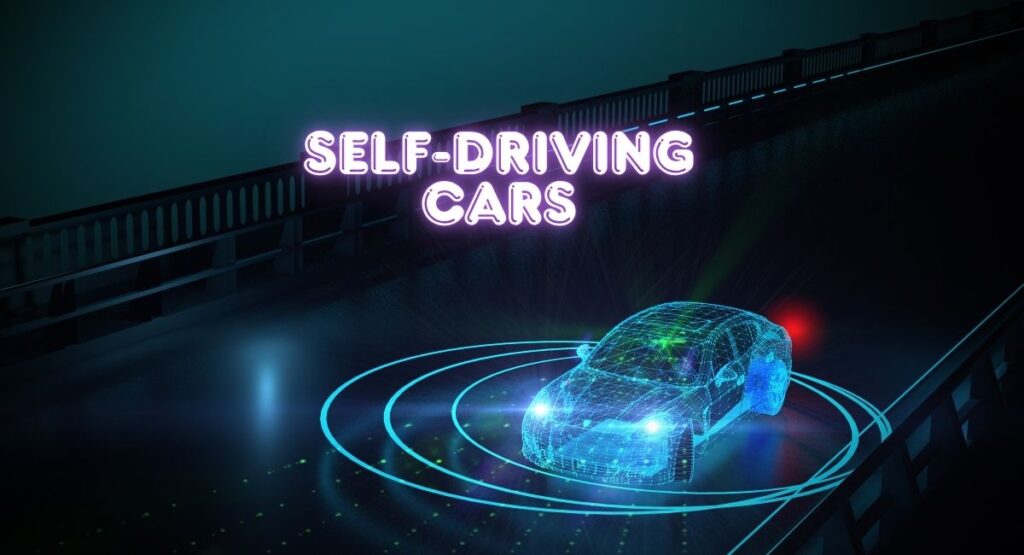
The first time I saw a video of a self-driving car—the Mercedes-Benz F015—to be honest, I didn’t believe a car could run without a human. But when I saw the car recognizing the route, stopping for traffic, and moving forward on its own, it felt like not just a machine, but pure magic.
The latest government guidelines on Autonomous Driving technology show how quickly this technology is advancing.
Humans don’t need to drive anymore; they can just sit back as a passenger and enjoy the journey effortlessly, because the steering is now AI’s responsibility. The fun part is that we can enjoy the trip even more now, because there’s less fear and more trust.
The 2026 Skill Gap Poll
Which skill will be most valuable for students in the next 5 years?
Little AI Masters™ bridges this gap by merging both worlds.
Learn more about our missionThe Era of Smart Roads: Where the Road Thinks Too
What if I asked if you have ever thought of anything else about roads besides them being bad or good? You might think, “What more is there to think about roads?” But with new technology, it seems roads have started using their brains too.
A while ago, I saw a documentary featuring a smart highway in Japan. Sensors were placed under the road to track the speed and movement of every car. If traffic increased, the signal would automatically change its timing to prevent jams.
Just imagine, the road itself understands where the traffic is heaviest and where it is not! This means technology is gradually taking the place of traffic police as well.
I believe if we had roads like this here, the daily traffic jam on the way to the office would be cut in half. Sometimes, it feels like AI isn’t just building machines but creating a new world of convenience for us.
Self-Learning Classrooms: Where the Teacher is ‘AI’
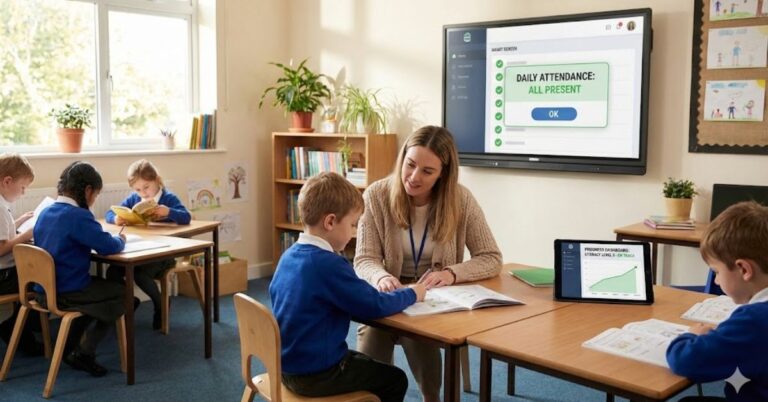
AI has done wonders in schools. Previously, every child was taught the same way, whether they were a fast learner or a slow one. But now things are changing because AI is starting to understand every child’s learning style.
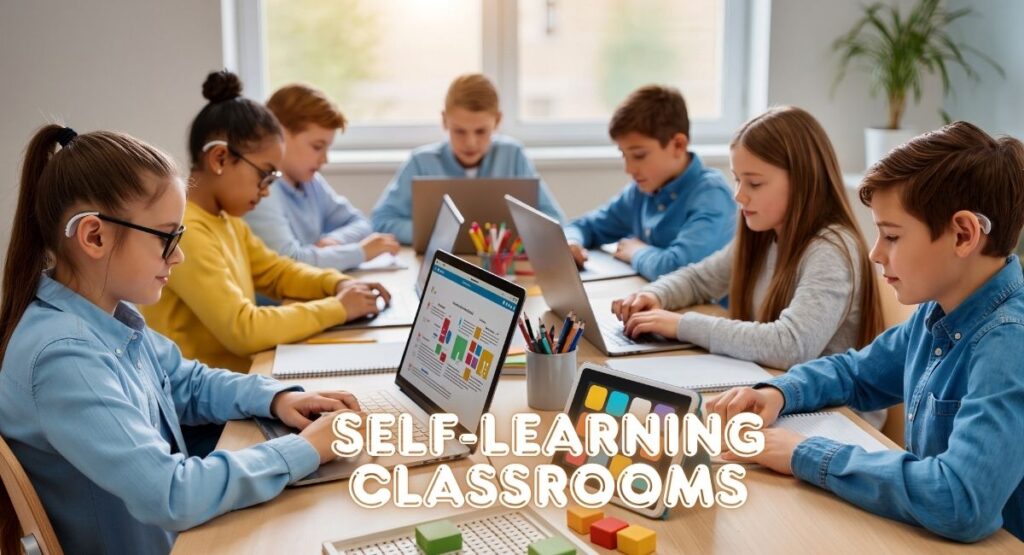
AI notices what a child grasps and where they get stuck, and then adjusts the teaching method accordingly. I once saw this in a children’s learning app myself—if a child answers math problems quickly, the app makes the questions slightly harder. But if a child hesitates, it gradually starts re-explaining with easier questions.
Earlier, teachers couldn’t connect with every child individually, but now AI understands every child based on their speed and interest. Seeing this truly made me feel that studying is no longer something to “fear,” but something to “understand” and “discover.”
AI in Office and Business: When Algorithms Started Making Decisions
Office work used to be very repetitive—the same thing had to be done every day. But now AI has taken all that boring work upon itself. Reports, emails, data analysis—AI does all of this in seconds. And humans can focus more on thinking, planning, and creative tasks.
I remember the first time I saw how a small AI tool could automatically generate a large report, I just kept thinking, “I never thought it would be this easy!” Now, in many offices, AI even understands which project will succeed and which idea people won’t like.
This means humans and machines work together like two great partners.
AI and Industry 5.0: The Partnership of Man and Machine
In factories, robots and humans now work side by side. Machines used to just obey orders, but now they think too. Cobots, or “collaborative robots,” are now built to work alongside humans.
They handle heavy lifting and repetitive tasks, allowing humans to focus on creativity and planning. I once saw a video of a car factory where a robot was attaching parts, and a human was only checking to make sure everything was correct.
The work was faster, error-free, and much safer. Seeing this, I felt that the machine isn’t replacing the human; it’s simply becoming a partner who never tires and never complains.
AI in Entertainment and Creativity: When Imagination Became Automated
Art has always been the identity of humans because we are the ones who inject emotion into things, making them seem alive even if they are inanimate objects. But I must tell you, machines are starting to do something similar now.
AI creates paintings, composes songs, and some even write poetry. I once listened to an entire music album called “I AM AI,” which was fully composed by a software program. But listening to it, it felt like a human pouring out their heart.
That’s when I realized that the meaning of art has changed; it’s no longer a story of human versus machine, but of humans and machines creating something new together.
The Future Direction: When Humans Will Be the “Co-Pilot,” Not the “Driver”
I believe the future will be a time when humans and AI work as a team. The machine will be able to make decisions, but the direction will always be set by the human. AI will make things easier for us, whether it’s driving, studying, or completing work quickly.
Just as self-driving cars drive themselves today, we still decide where to go. AI recognizes the route and handles the traffic, but the desire for the destination can only be set by a human.
I think that is the real magic—where the machine thinks with its mind and the human thinks with their heart. If they both come together, the world can become even smarter and more beautiful.
Conclusion: The Freedom to Learn, Move, and Think – That is the Real AI
If we look at it from a positive perspective, AI has not taken control away from us; rather, AI has given us more freedom. We can think about bigger things. We no longer have to get tangled up in small, repetitive things.
We can think about bigger things—creative work, new ideas, and things that weren’t possible before. From self-driving cars to smart classrooms, AI has proven that the relationship between humans and machines is not about “control,” but about “connection.”
Now machines are not working for us; they are learning to work with us. And perhaps, that is the true progress.

Sachin Sharma is a Tech AI Writer and Chief Editor at N4GM.com, simplifying how AI is transforming education and smart learning since 2019. With deep SEO expertise, he delivers reliable insights on AI learning tools and EdTech trends, helping students and educators navigate the future of technology.