
The Future of Learning: 12 Pros and Cons of AI in Schools (2026 Guide for Parents)
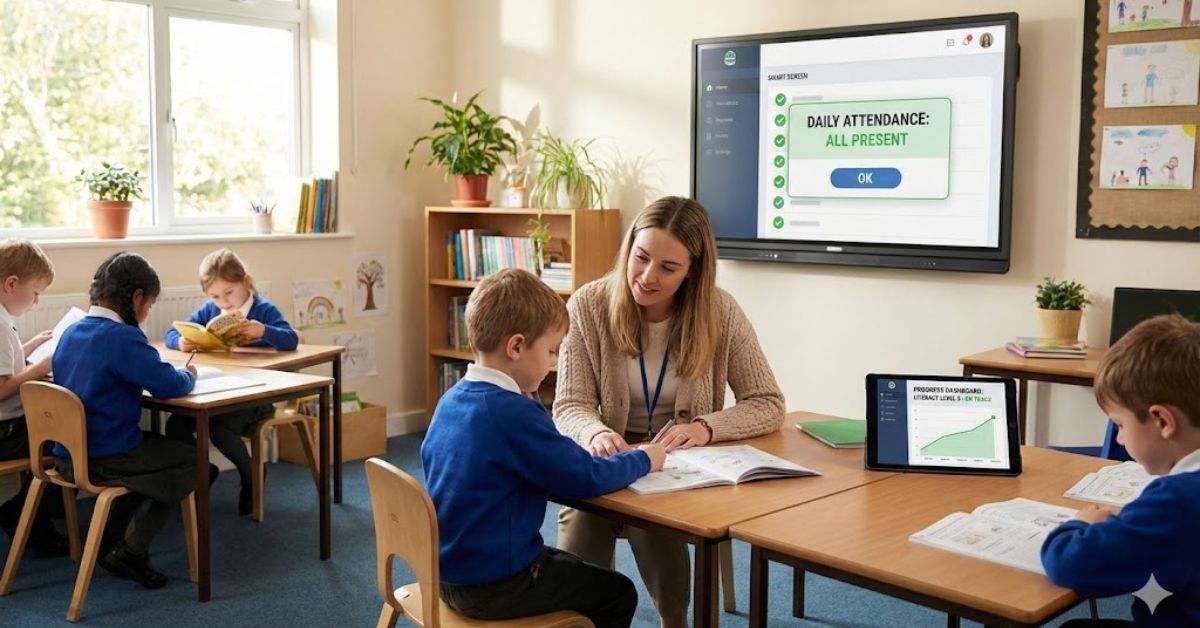
Not long ago, classrooms were centered around blackboards, chalk, and printed textbooks. Today, many schools use smart boards, learning apps, and digital homework platforms. Artificial Intelligence is the next step in this slow but steady change.
When people hear “AI in schools,” it often sounds bigger and scarier than it really is. In simple terms, AI is software that helps computers notice patterns and make suggestions, much like a helpful assistant.
The real question for parents and teachers is not whether AI will enter education—it already has. The question is how it will be used.
Table of Contents
Will AI replace teachers, or will it support them?
Many educators today see AI as a support system rather than a replacement, similar to the broader idea of a balanced human–AI partnership shaping the future. This article aims to calmly explain the pros and cons of AI in schools so families and educators can make informed, confident choices together.
Can you solve this AI Logic Puzzle?
“A robot needs to sort 100 blue balls and 100 red balls. What is the most efficient way to teach it the difference?”
The Logic: Training Data & Pattern Recognition. By showing the AI examples, it learns to classify.
Before diving deeper, here’s a quick overview of how AI can help schools—and where caution is still needed.
| Potential Benefits of AI in Schools | Possible Risks and Limitations |
|---|---|
| Saves teachers time by automating tasks like attendance, basic grading, and reports | Overuse may reduce students’ independent thinking and problem-solving skills |
| Adapts practice material to match each child’s learning pace | Students may become too dependent on AI for answers |
| Helps identify learning gaps early, allowing timely support | AI tools can sometimes provide incorrect or biased information |
| Offers learning support outside school hours when teachers are unavailable | Increased screen time may affect social interaction and communication skills |
| Supports students with learning difficulties through assistive tools | Raises concerns about student data privacy and security |
| Gives teachers more time for one-on-one guidance and lesson planning | Lacks human empathy, judgment, and emotional understanding |
Understanding AI in Simple School Terms
For children, AI can be explained as a smart helper, not a thinking machine. Just as ‘spellcheck’ suggests corrections while writing, AI suggests learning content or practice questions based on past work. It does not “understand” feelings or ideas the way humans do. It only follows instructions given by people.
In schools, AI might help suggest reading levels, generate practice quizzes, or point out areas where a student needs more help. Some early examples of this approach can be seen in experiments with AI-supported teaching roles around the world. This everyday framing helps children see AI as a tool, similar to a calculator or dictionary, rather than something mysterious or powerful on its own.
How AI Can Support Teachers in the Classroom
1. Reducing Administrative Work
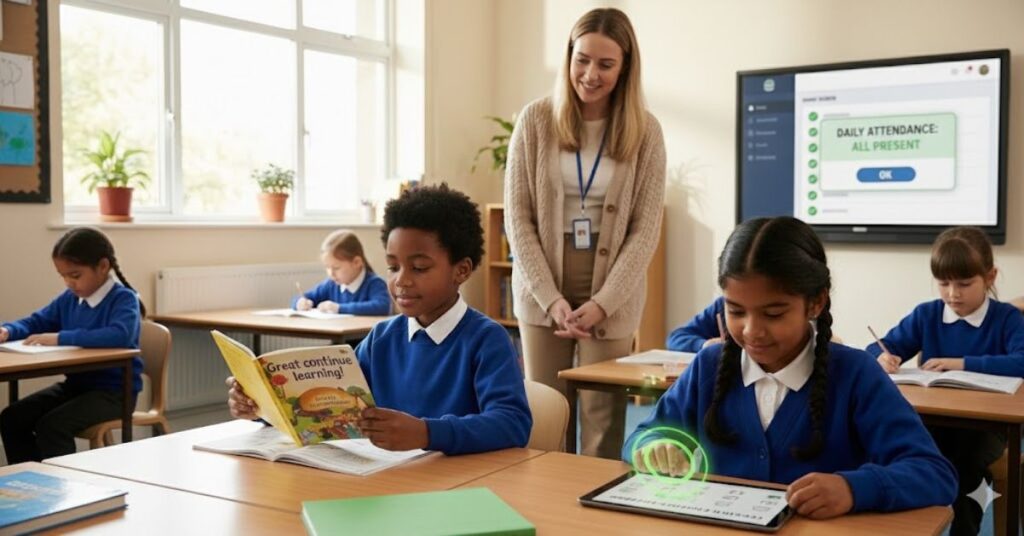
One major positive effect of AI in education is how it helps teachers manage time. Tasks like attendance tracking, grading simple quizzes, and creating basic reports can take hours every week. AI systems can handle these repetitive jobs quickly and consistently.
This matters because when teachers spend less time on paperwork, they have more time for lesson preparation and one-on-one support. Similar support systems are already visible in early smart classroom models for primary grades, where technology quietly assists without changing the classroom experience.
2. Improving Lesson Planning
AI tools can help teachers explore different ways to explain the same topic. For example, a math lesson can be turned into a story, a game, or a visual activity based on student needs. This does not replace a teacher’s creativity but expands their options.
Teachers still decide what is appropriate for their class. AI simply offers suggestions, much like a teaching assistant who gathers ideas. This reflects how many educators are learning to adapt and stay effective as teaching methods evolve in a rapidly changing, AI-influenced world.
Science backs up educators here as well:
“Research has proven that our brains process visuals 60,000 times faster than text. While reading books often requires the brain to struggle more with concentration, complex subjects become much easier to grasp through video.
According to research from MIT, the human brain can identify images in as little as 13 milliseconds. Due to the ‘Picture Superiority Effect‘, information gained from videos is retained much more deeply in our long-term memory.”
This is precisely why, in today’s digital age, smart classrooms and AI video tools are making lesson planning more precise and effective.
Spotting Learning Gaps Early
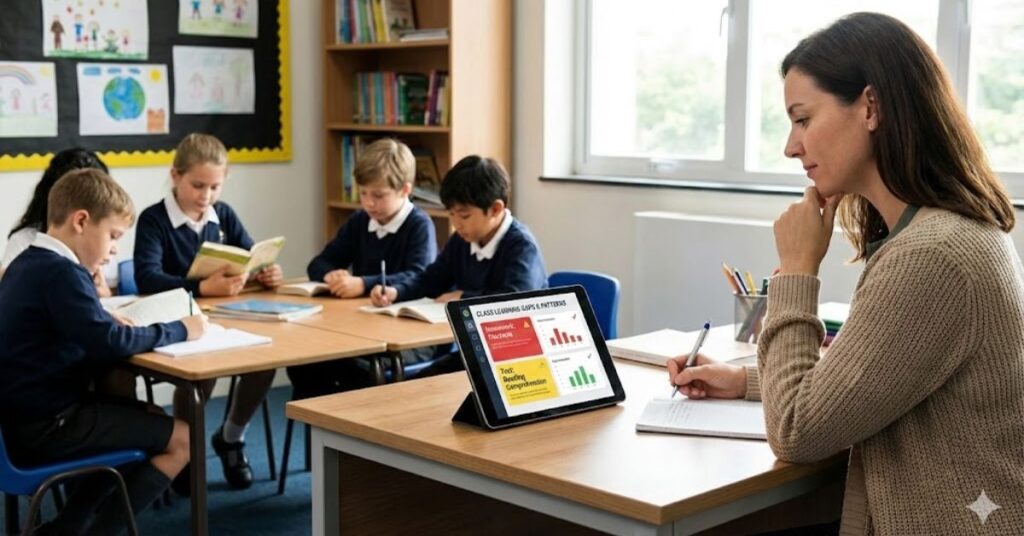
AI can review patterns in homework and tests to highlight where students may be struggling. If many students are confused by the same concept, teachers can adjust lessons before small problems grow bigger.
For parents, this can mean earlier feedback and clearer communication. However, experts also caution that over-reliance on automation may reduce independent thinking, a concern often raised in discussions about whether AI can slowly weaken students’ thinking capacity.
Benefits for Students and Parents
1. Personalized Learning at a Comfortable Pace
Every child learns differently. Some children need more time with reading, while others move quickly through math. AI systems can adjust practice material to match each child’s pace, which is a positive effect of AI in education when used thoughtfully.
This does not mean children learn alone. Teachers still guide the process. AI simply helps avoid one-size-fits-all learning and supports steady progress without comparing students to each other.
2. Learning Support Beyond School Hours
Many parents worry about homework time at home. AI-powered learning tools can offer simple explanations or practice questions after school hours. This support is especially helpful when parents are busy or unsure how to explain certain topics.
However, these tools should guide, not give direct answers. This is why many families focus on monitoring their child’s use of AI homework helpers without pressure, so learning remains healthy and balanced.
3. Supporting Inclusive Education
AI can also support children with learning differences. Tools like speech-to-text, reading support, and visual learning aids help students who struggle with traditional teaching methods.
This is one of the most positive impacts of artificial intelligence on students when guided responsibly. It allows more children to participate confidently in learning without feeling left behind or labeled.
The Challenges and Risks of AI in Schools
1. Concerns About Original Thinking
One of the biggest disadvantages of AI in education is the risk of over-dependence. If students rely on AI to complete homework or write answers, they may stop thinking deeply.
This concern often appears when comparing traditional study platforms with newer AI-based homework tools, such as in discussions around AI homework solvers versus conventional learning methods. Clear rules are essential so AI supports learning rather than replacing effort.
2. Reduced Social Interaction
Too much screen time can affect social development. Schools are social spaces where children learn teamwork, communication, and empathy. If AI tools are overused, students may spend less time interacting with teachers and classmates.
Technology should never replace group discussions, play, or real classroom conversations that help children grow emotionally.
3. Data Privacy and Safety Concerns
AI tools collect data to work effectively. This raises concerns about student privacy. Parents and schools must understand how data is stored and protected.
Protecting student information is a serious challenge of AI in education. Schools should choose tools carefully and communicate clearly with parents about data use, access, and limits.
4. When AI Gets It Wrong
AI can sometimes provide incorrect or biased information. This happens because AI learns from existing data, which may not always be accurate.
Teaching children to question and verify information is essential. This challenge highlights why human teachers remain critical in guiding students and correcting mistakes when technology falls short.
Keeping the Human Role at the Center
Teachers are not being replaced. Their role is shifting. Instead of delivering information, teachers guide students in understanding, questioning, and applying knowledge responsibly.
Parents also play an important role by setting boundaries at home. Encouraging offline play, reading, and conversation balances technology use. When schools and families work together, children receive consistent guidance about how and when to use AI.
This collaboration ensures that AI stays a helpful assistant, not a decision-maker in a child’s learning journey.
Common Questions Parents and Teachers Ask
Will AI eventually replace teachers?
No. AI lacks emotional understanding, judgment, and personal connection. Teachers provide mentorship, encouragement, and moral guidance that technology cannot replace.
At what age should children use AI tools?
There is no fixed age. What matters is supervision and purpose. Younger children benefit from guided use, while older students can slowly learn responsible and limited use.
Conclusion:
Open conversations about AI at home and school help children feel confident rather than confused. When adults explain technology calmly, kids learn to use it thoughtfully instead of depending on it blindly.
As AI slowly becomes part of everyday learning, guiding children with clarity and balance ensures that technology supports education without replacing curiosity, creativity, or human connection.

Sachin Sharma is a Tech AI Writer and Chief Editor at N4GM.com, simplifying how AI is transforming education and smart learning since 2019. With deep SEO expertise, he delivers reliable insights on AI learning tools and EdTech trends, helping students and educators navigate the future of technology.



This is my first time pay a quick visit at here and i am really happy to read everthing at one place
I like the efforts you have put in this, regards for all the great content.
I appreciate you sharing this blog post. Thanks Again. Cool.
I have to admit, I was skeptical when I first started reading based on the title, but you completely won me over! Your arguments are well-reasoned and you present everything in such a balanced way that I couldn’t help but keep reading. I particularly appreciated how you addressed potential counterarguments instead of ignoring them. That level of intellectual honesty is rare and really valuable. You’ve given me a lot to think about, and I’ll probably be mulling this over for days.
I’m often to blogging and i really appreciate your content. The article has actually peaks my interest. I’m going to bookmark your web site and maintain checking for brand spanking new information.
Nice post. I learn something totally new and challenging on websites
Your comment presents a concise but informed interpretation.