Best Ai Video Games For Nursery Students
According to institutions like McKinsey and the IMF, by 2045 around 40–50% of jobs could be automated by AI. This is why – parents today are increasingly concerned about their children’s future.
For the same reason, schools are now emphasizing AI-powered smart classes to help children stay connected with the world of tomorrow. If you’re planning your child’s education this post could prove very useful.
For example - You can teach your nursery-going child with the help of AI video games, without noteboks, pencils, books, or scolding. Their Learning becomes as fun as playing, and from an early age, your child gets familiar with future technologies like AI.A study by IJSTR also proves that **AI video games** teach basic things like colors, shapes, leters, and numbers through play. They not only promote mental, social, and emotional development but also maintain children’s focus and enthusiasm.
When learning is fun and interactive, children can focus for longer and develop a positive attitude towards learning. Therefore I have shared a list of the 8 best AI video games that should be there for nursery students in an AI class.
1. Osmo Genius Starter Kit
Small children easily learn A, B, C, D at home and in class, but when it comes to learning words made from them, like ‘cat,’ ‘ball,’ etc., it becomes a struggle and takes a lot of time.
Now, imagine if the same child starts forming the word “CAT” while playing with letters and a cute picture of a cat immediately appears on the screen—they would learn quickly and with fun.
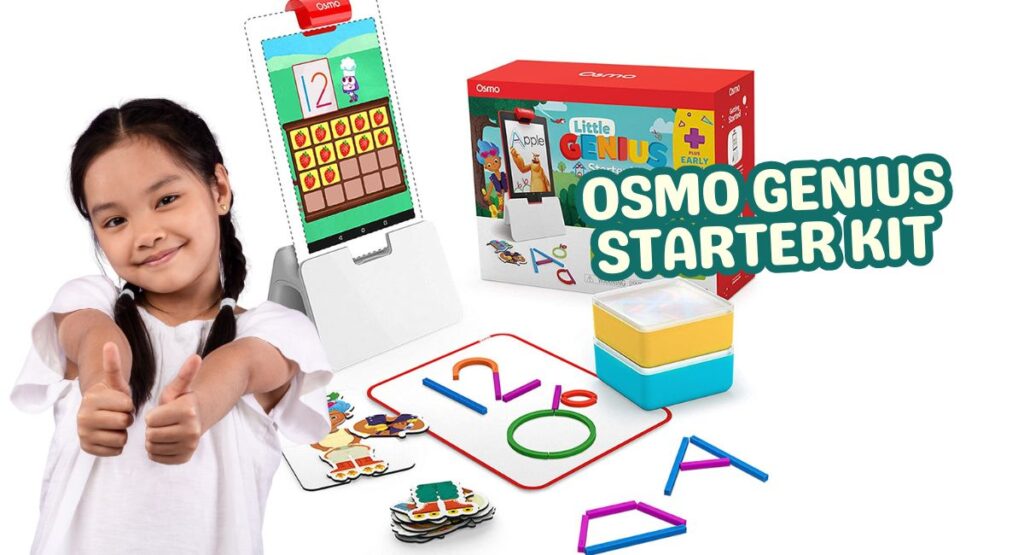
This is the magic of the **Osmo Genius Starter Kit**. In this kit, children get real blocks, letters, and cards, which they use to learn words by joining them with their own hands.
With this, kids end up learning math, word-building, puzzles, and even drawing through play.
For example - if a child creates 2 + 3 with math blocks, the screen immediately lights up with the number 5. This method turns out to be way more fun and memorable than traditional books.The best part is that children learn at their own pace—if a child is learning slowly, the game gives them easy tasks, and if the child is fast, new challenges appear.
2. Khan Academy Kids
I have observed and a 2022 study published in “The Journal of Educational Research” confirms, that – young children learn very quickly from their friends. So, what if they had a friend (a cartoon character) to help them with their studies? You might be wondering where your child can find such a companion—well, don’t wory, because Khan Academy Kids can be an excellent gift for you.
In this app, lovable cartoon characters guide children like friends.
For instance - if a child is learning to count a little animal on the screen might say, - "Come on, count 5 apples for me!" and the child will count by touching them. At the same time, the child is learning and playing.It’s not just about math and letters; it also teaches stories, songs, coloring, drawing, and even social-emotional learning (like making friends, helping others, and sharing). This means the child learns good values along with their studies.
3. Buddy.ai
Parents often want their child to perform on stage without hesitation, but in reality – when they have to speak on stage in another language (like English), their words begin to falter. The main reason for this is a lack of proper practice of what they have memorized. And if you want your child to learn other languages along with their studies, they need to have someone to converse with.
Just think, what if your child had a cute, talking friend with them all the time who could teach them to speak English, tell them stories, ask quetions, and listen to their answers? That’s what **Buddy.ai** does. It’s an interactive app where children get a virtual tutor who converses with them in English.
For example - a child opens the app, and Buddy asks, "What is your favorite color?" The child can even respond in Hindi, but Buddy will gradually teach them to answer in English. If the child says "Red," Buddy will happily say, "Great! Red is a nice color!" This way, the child learns to speak without fear or hesitation.
The biggest feature of this app is that it adjusts to each child’s speed and level. If a child speaks slowly Buddy will patiently wait and explain using simple words and if the child learns quickly, it will give them slightly more difficult sentences.
4. Prodigy Math
It is very difficult to teach math to a nursery child because they focus more on playing than on learning. But if addition and subtraction are presented as an exciting game. The child will start learning it on their own.
Prodigy Math is one such magical game where a child travels through a fantasy world. In this world they have to cross different levels and at each level, small math problems block their way.
For exampl - a child is playing, and a cute character appears on the screen and asks, "If you have 3 balloons and a friend gives you 2 more, how many do you have now?" When the child gives the correct answer, the door opens, and the next adventure begins. This way, the child learns math through play without even realizing they are studying.
5. Duolingo Kids
“Research in cognitive psychology, including Dual-Coding Theory (Paivio, 1971) and studies like Coch et al., 2018 in Frontiers in Psychology, clearly shows that children learn faster and retain better when words or spellings are paired with meaningful images or characters.”
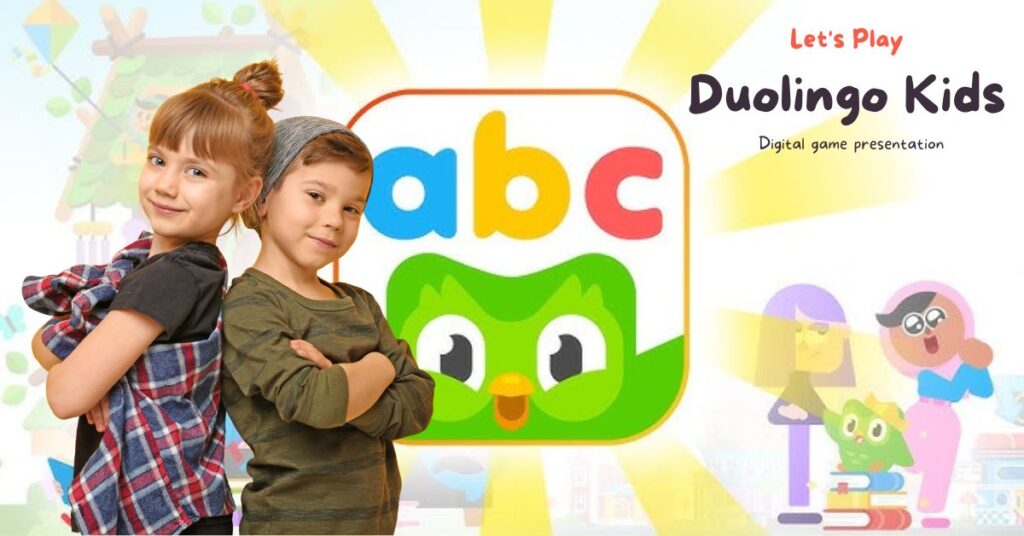
Duolingo Kids uses this exact concept to teach languages to young children. It features cute characters that give kids simple tasks like speaking, listening, and identifying.
For example - a parrot on the screen might say – "Say Parrot!" And if the child speaks correctly they receive stars and rewards. This way the child learns to speak and understand new words while playing a game.6. Shadow Art by Google
Parents often worry about their children’s future—what they will become when they grow up—even before getting them admitted to school. Under that pressure, they don’t allow the child’s imaginative power to grow; instead forcing them to study only what is written in books.
And the very age when children should be exploring on their own, we push them under the burden of studies. I remember those summer holidays when I would sit with my grandfather by the lamp in our village, making shapes with our hands, and learning lessons through that play. But perhaps those lamps and walls are gone now, and people just don’t have that much time anymore.
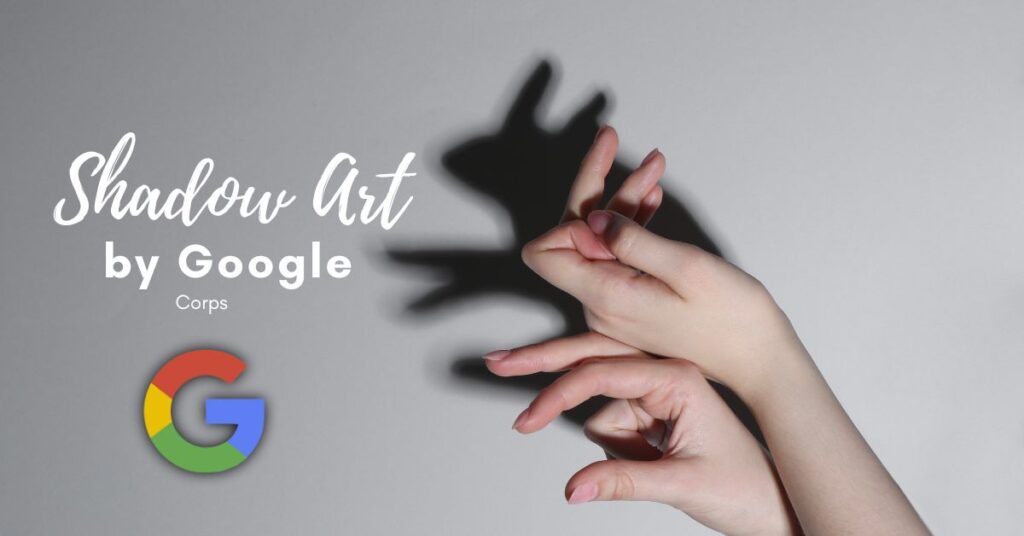
However, **Shadow Art by Google** is a fun app where children learn new things by playing with light and shadow. Suppose a child shapes their hand in a certain way in the light of a lamp or flashlight. The app then transforms that shadow into an animal, a tree, or another beautiful design on the screen.
For instance: if a child holds their fingers in an ear-like position, it can be transformed into the image of a rabbit. By playing this way, children start to understand how light and shadow can create different shapes.The most interesting thing about this app is that it gives free rein to children’s imagination. Children think for themselves about what new shape to create, how to move their hands, or what toy to use. This kind of play instills in them the habit of constant experimentation and self-discovery.
7. Zoombinis
Do you remember those cold winter evenings in the village when the elders would sit by the fire and tell all sorts of riddles?
For example, “You can drink me when you’re thirsty, eat me when you’re hungry, and burn me when you’re cold. What am I?” And children would show great interest, trying to be the first to give the correct answer – Coconut.
But those things don’t exist anymore—so how can we boost our children’s logical thinking power? The solution lies in a sweet game called Zoombinis.
In this game, children guide small characters (the Zoombinis) along a safe path. They face various challenges along the way—like crossing strange bridges or solving puzzles involving different colors and shapes.
For example - suppose a child has to choose which path the Zoombini with the blue hat will take and which path the one with the red shoes will take. The child uses **patterns and logic** to make the right decision. This way, they get a mental workout while playing.
8. CodeSpark Academy
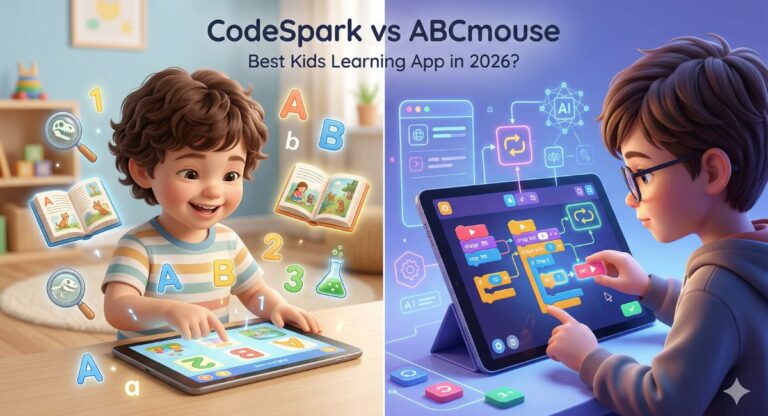
CodeSpark Academy is a game that introduces young children to the world of coding without boring textbooks. It fetures cute characters called “Foos.” The child moves these Foos in the correct direction by correctly connecting small blocks or commands.
For example - imagine the Foos need to cross a bridge; the child sets up blocks on the screen like "Move Forward" → "Jump" → "Turn Right." When the sequence is correct the Foos happily move forward. This way, the child learns logic and problem-solving skills through play, without even realizing they are “coding.”
Conclusion:
I have selected these 8 AI video games that should definitely be included in a smart AI classroom for students from nursery up to grade 5.
These games will not only prepare our children for AI technology in the future but will also improve their overall growth. Furthermore, if AI teachers (robots) were to replace real teachers in the future, children would be able to coordinate and interact with them properly.

Sachin Sharma is a Tech AI Writer and Chief Editor at N4GM.com, simplifying how AI is transforming education and smart learning since 2019. With deep SEO expertise, he delivers reliable insights on AI learning tools and EdTech trends, helping students and educators navigate the future of technology.