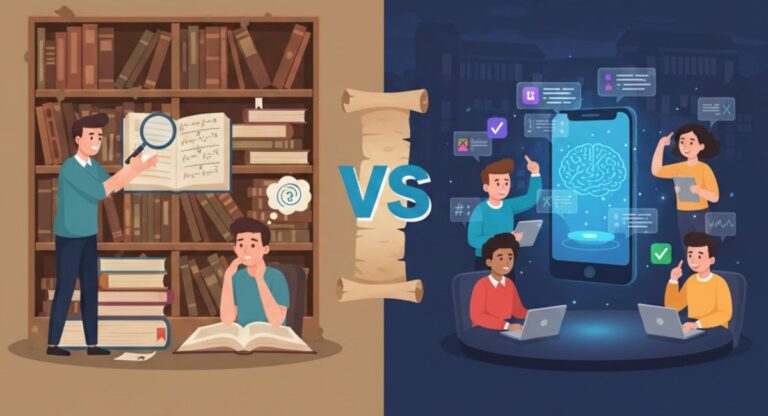
How AI Could Teach Values Like Sharing & Empathy to Nursery Kids
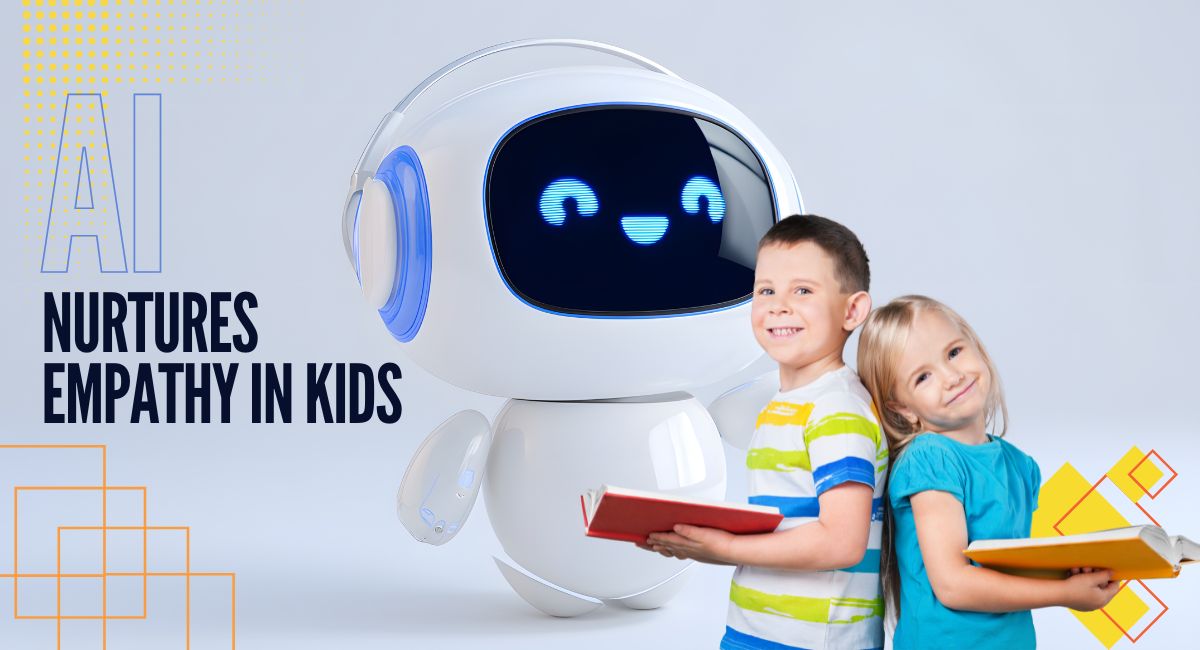
These days AI has become so advanced that it’s even being used to teach students in schools and colleges across the world. In such a scenario – one question often arises in the minds of parents and teachers — can AI really teach our children core moral values like sharing and empathy, the way our elders used to teach us?
Several studies are being conducted across the globe on this topic. One such study published in 2023 by the Golden Age Journal of UIN Sunan Kalijaga University (Indonesia), found that AI-based storytelling videos significantly influenced young children’s emotional engagement and interest in moral education.
So, I want to ease parent’s concerns and show them how AI is actually capable of teaching their children moral values.
1. Through Emotional Mirrors
If you have recently enrolled your little one in school and are worried that they don’t share their things or often get into fights with other kids and you don’t have enough time to explain these things to them and guide them on what’s right? Then you can now leave this job to AI. The smart school your child is attending is equipped with AI robot teachers, gadgets, and other tools that can effectively teach your child these moral values.
According to Ying Xu, a researcher at the Harvard Graduate School of Education – if AI is designed according to children’s developmental needs, it can enhance their ability to make moral decisions. This in turn helps children develop empathy and a tendency to cooperate and compromise.
Just like us, AI can also recognize children’s emotions — happiness, anger, sadness, etc… through their facial expressions and teach them empathy guiding them on what they should or shouldn’t do in a given situation.
For example - I have two daughters - aged 4 and 6. One day, they were fighting over a doll - the younger one said, “It’s mine, I want to play with it,” while the older one refused to give it. The fight escalated. I intervened and suggested - “Instead of fighting you can play together or one of you can play first and then the other.” Both agreed and my older daughter let the younger one play with the doll.In the same way that a teacher mediates children’s conflicts and teaches them communication and compromise. AI can also help children learn peaceful interaction, cooperation, and sharing behaviors. This is supported by the NAEYC’s: Three-Step Approach to Help Children Navigate Conflict, Fall 2023 report.
2. Storytelling/Rhymes Through Emotion
You’ve probably listened to your grandmother’s stories during childhood and remember how, after each story, she’d ask you questions about its moral.
Believe it or not those small bedtime tales played a huge role in saping your moral values and sense of duty. In some way or another the lessons learned from those simple stories must have influenced an important decision or action in your life later on.
But times have changed. Today’s kids are growing up not with grandparents by their side, but with gadgets like – tablets, AI storytelling pods, and smart devices. And in this fast show-off-driven world, every parent still worries about one thing: how to build interpersonal skills, empathy, and good values in their child.
That’s where AI storytelling and rhyming pods (like interactive beds or smart toys) come in. These devices narrate stories where characters show sharing, kindness, and emotional understanding. Through these stories and rhymes, children learn meaningful lessons that stay with them for life.
One such platform – **KiddyRhymes** also helps guide children through interactive rhymes that promote good behavior and moral development. You should definitely check it out.
3. By conducting AI-Coached group activities
If your child is introverted – doesn’t easily mix with other kids and rarely shares their things (toys, food etc.) — the main reason behind this is today’s lifestyle.
Earlier, people lived in villages where children grew up not just in their own homes but in the company of neighbors and extended families. This naturally made them socially active and taught them how to interact, share, and get along with others.
But life in cities is completely different people barely meet and kids hardly visit each other’s homes. So how will they learn social-emotional values like sharing and caring?
That’s exactly why schools now focus on group activities. In our time, we had SUPW classes, sports periods, and various group projects that taught teamwork.
Today, AI is taking that role forward keeping a close eye on children’s group activities. For instance – if a child is playing alone or refuses to share a toy, AI intervenes and helps correct the behavior.
In smart classrooms kids can also play AI-based collaborative video games, where the group has to work together to complete tasks. If every child contributes the system rewards them and even encourages them to help and support each other along the way.
Conclusion:
Apart from these, there are many other ways through which AI can help instill good habits in children — such as through positive reinforcement, emotional balance, and other behavioral guidance methods.
But the most important question is — what will your child’s future look like with AI? Will AI truly help your child become successful, empathetic, and emotionally intelligent — or not?
- I’ll leave that for you to decide.
- You can share your thoughts in the comments below.
And before you go, don’t forget to check out my previous post — “How AI Can Stop Children’s Bullying in Schools” — where I’ve discussed this topic in more depth.

Sachin Sharma is a Tech AI Writer and Chief Editor at N4GM.com, simplifying how AI is transforming education and smart learning since 2019. With deep SEO expertise, he delivers reliable insights on AI learning tools and EdTech trends, helping students and educators navigate the future of technology.