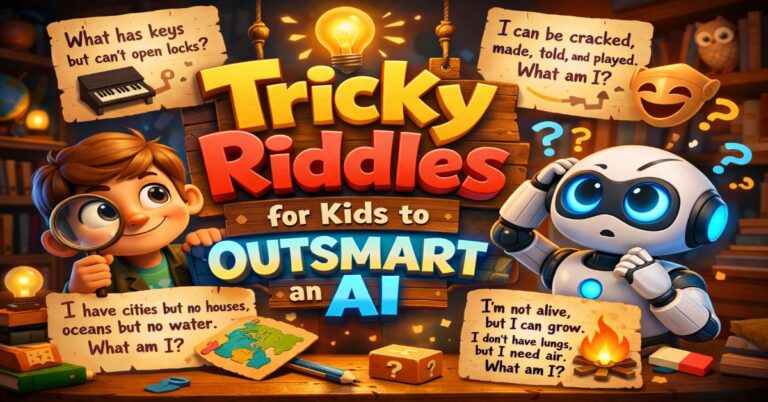
Artificial intelligence may sound like a complicated topic, but children can begin understanding its foundations much earlier than most parents expect. The key is not complex coding lessons. The key is logic.
Simple riddles are one of the most effective ways to introduce logical thinking to young learners. A child listens to a clue, analyzes possibilities, and then decides which answer fits best. This process mirrors the same thinking patterns used in coding and computational problem solving.
In this guide, we will explore simple AI riddles designed to build early logic skills, explain how they support computational thinking, and show how these small puzzles prepare children for modern technology learning.
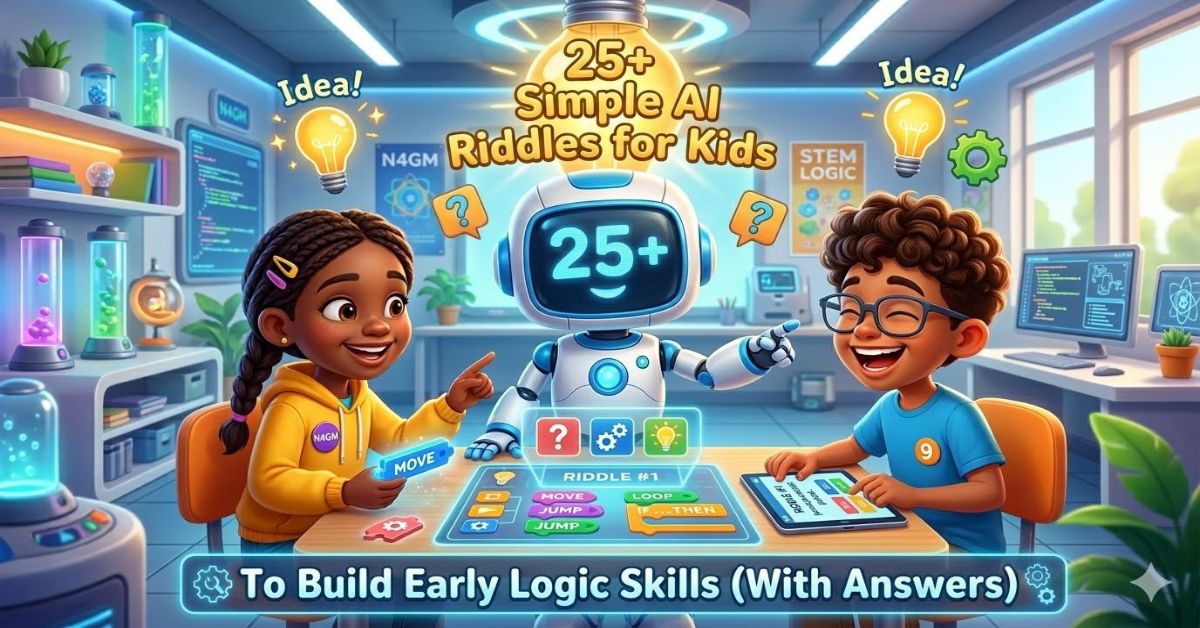
25+ Simple AI Riddles for Kids to Build Early Logic Skills
We have categorized these riddles to reflect the core pillars of technology education: Coding Logic, AI Functionality, and Hardware.
Section 1: The Building Blocks (Coding Logic)
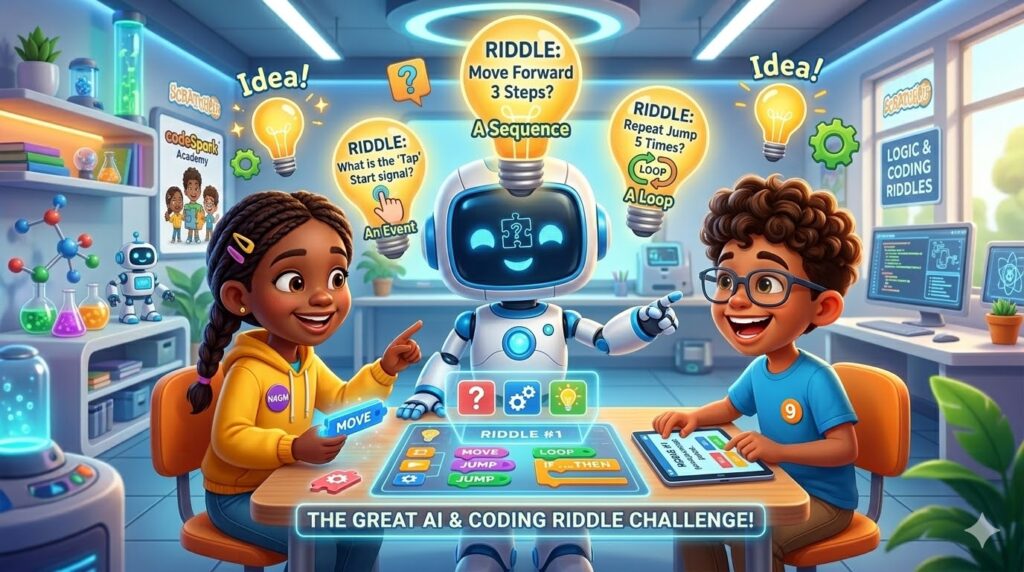
These riddles mirror the “Block-based” coding found in apps like codeSpark. They focus on sequencing, loops, and events.
💻
1-5 Riddles List (Read & Learn Mode)
Show Questions ▾
1. I am a command that tells a character to “Do it again!” I save you from writing the same code over and over. What am I?
Options: A. A Stop sign | B. A Loop | C. A Save button | D. A Delete key
Answer: A Loop
2. If you put your socks on after your shoes in code, your program won’t work! What is this “step-by-step” order called?
Options: A. A Song | B. A Sequence | C. A Secret | D. A Shuffle
Answer: A Sequence
3. I am a tiny “bug” hiding in your code making your robot walk into a wall. When you find and fix me, what are you doing?
Options: A. Cleaning | B. Debugging | C. Sleeping | D. Painting
Answer: Debugging
4. I am a rule that says: “IF it is raining, THEN use an umbrella.” Computers use me to make decisions. What am I?
Options: A. A Guess | B. A Condition | C. A Wish | D. A Dream
Answer: A Condition
5. In coding, when you “Tap” a character to make it jump, that tap is called a special “Start” signal. What is it?
Options: A. A Mistake | B. An Event | C. A Battery | D. A Noise
Answer: An Event
Interactive: Riddle 1 of 5Code Logic Explorer
Loading Riddle…
Section 2: How AI “Thinks” (The Brains)
These riddles help kids understand concepts like Machine Learning and Data Processing.
🤖
6-10 Riddles List (Read & Learn Mode)
Show Questions ▾
6. I look at thousands of pictures of cats until I can spot a kitten anywhere. I learn by looking at examples. What am I?
Options: A. A Printer | B. Machine Learning | C. A Mirror | D. A Flashlight
Answer: Machine Learning
7. I am the set of instructions that tells an AI exactly how to solve a puzzle or sort your toys. What is my “tech” name?
Options: A. An Alphabet | B. An Algorithm | C. An Accordion | D. An Alibi
Answer: An Algorithm
8. I am like “brain food” for AI. The more facts and pictures you give me, the smarter the robot gets. What am I?
Options: A. Electricity | B. Data | C. Pizza | D. Sunlight
Answer: Data
9. I don’t see colors or shapes like you do. I see the world as millions of tiny numbers called pixels. What am I using?
Options: A. Magic | B. Computer Vision | C. A Map | D. Sunglasses
Answer: Computer Vision
10. I notice that you always play “Space Games” on Fridays, so I show you a new space game every Friday morning. What am I?
Options: A. A Personal Assistant | B. A Recommendation Algorithm | C. A Clock | D. A Calendar
Answer: A Recommendation Algorithm
Interactive: Riddle 6 of 10AI Mindset Quiz
Loading Riddle…
Section 3: Game Mechanics and STEM Fun
Learning to navigate a digital interface is a key part of Digital Literacy.
🎮
11-15 Riddles List (Read & Learn Mode)
Show Questions ▾
11. In a game, I tell your character to stay still for 2 seconds before jumping. I help you time your moves perfectly. What am I?
Options: A. A Speed boost | B. A Wait block | C. A Game Over screen | D. A Volume button
Answer: A Wait block
12. I am the invisible box where a computer stores a number, like your high score or how many coins you collected. What am I?
Options: A. A Backpack | B. A Variable | C. A Treasure chest | D. A Pocket
Answer: A Variable
13. I am the hero of your game! Whether I am a dinosaur or a robot, you write code to make me move. What is my tech name?
Options: A. A Ghost | B. A Sprite | C. A Statue | D. A Sticker
Answer: A Sprite
14. I am the code that knows the exact moment your character touches a lava pit or a gold coin. What am I?
Options: A. A Jump sensor | B. A Collision detector | C. A Timer | D. A Speedometer
Answer: A Collision detector
15. I am like a door that only opens if you have both a key AND a password. What kind of logic am I?
Options: A. An “OR” gate | B. An “AND” gate | C. A “NOT” gate | D. A “MAYBE” gate
Answer: An “AND” gate
Interactive: Riddle 11 of 15Game Dev Genius
Loading Riddle…
Section 4: Robotic Anatomy and Function
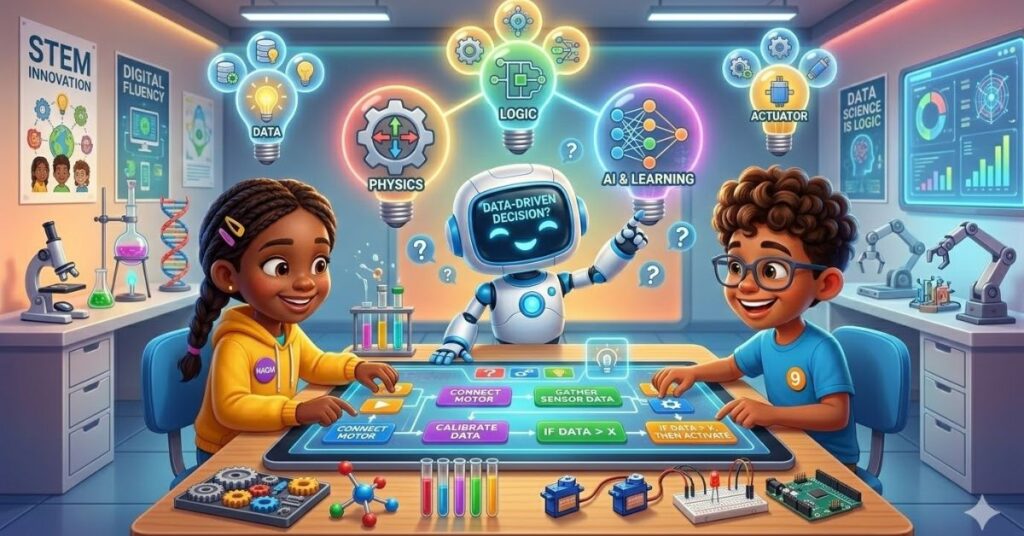
Understanding the hardware is just as important as the software.
🤖
16-20 Riddles List (Read & Learn Mode)
Show Questions ▾
16. I send out an invisible sound wave (like a bat) to see how far away a wall is so the robot doesn’t crash. What am I?
Options: A. A Flashlight | B. An Ultrasonic Sensor | C. A Camera | D. An Earbud
Answer: An Ultrasonic Sensor
17. I am the part that actually turns the wheels or moves the arms when the code says “Go!” What am I?
Options: A. A Battery | B. A Motor | C. A Computer chip | D. A Gear
Answer: A Motor
18. I don’t speak English or Hindi natively. I speak in 0s and 1s. What is my secret language called?
Options: A. Morse Code | B. Binary | C. Sign Language | D. Latin
Answer: Binary
19. When you talk to a smart speaker, I turn your “human voice” into “computer text” so the robot understands. What am I?
Options: A. A Radio | B. Speech Recognition | C. A Megaphone | D. A Whistle
Answer: Speech Recognition
20. I move across the floor eating dust for lunch, using sensors to make sure I don’t bump into your dog. What am I?
Options: A. A Vacuum | B. A Robot Vacuum | C. A Broom | D. A Mop
Answer: A Robot Vacuum
Interactive: Riddle 16 of 20Hardware Hero
Loading Riddle…
Section 5: Computational Thinking Skills
These riddles focus on the “Mindset” of a young technologist.
🚀
21-25 Riddles List (Read & Learn Mode)
Show Questions ▾
21. I am the skill you use when you break a big problem into tiny, easy steps for a robot to follow. What am I?
Options: A. Jumping | B. Decomposition | C. Singing | D. Running
Answer: Decomposition
22. I am a special drawing that uses shapes and arrows to show how a program works before we write it. What am I?
Options: A. A Painting | B. A Flowchart | C. A Comic strip | D. A Doodle
Answer: A Flowchart
23. I am a virtual copy of a real robot. Scientists test code on me first so the real robot doesn’t break! What am I?
Options: A. A Photograph | B. A Simulation | C. A Statue | D. A Memory
Answer: A Simulation
24. I am not just for math; you can use me to make art, music, and movies on a computer. What am I?
Options: A. A Ruler | B. Coding | C. An Eraser | D. A Glue stick
Answer: Coding
25. I am the person who tells the AI what to do and builds the robots of the future. Who am I?
Options: A. A Robot | B. A Coder (You!) | C. A Computer | D. A Battery
Answer: A Coder
Interactive: Riddle 21 of 25Future Coder Academy
Loading Riddle…
The Connection Between Riddles and Coding Logic
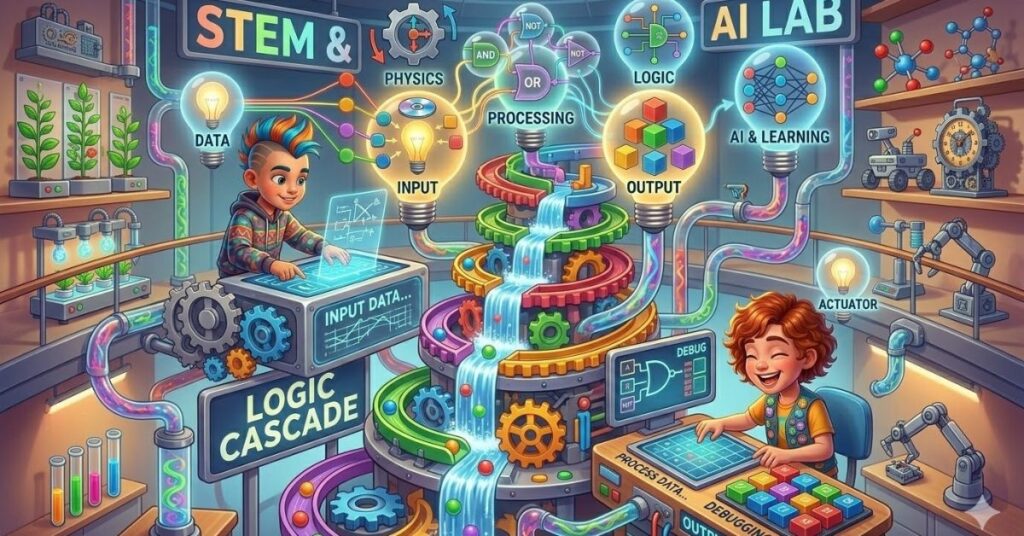
You might wonder, “How does a simple riddle help my child learn AI?” The answer lies in the way the brain processes a puzzle. To solve a riddle, a child must:
Analyze Data: Listen to the clues (Input).
Identify Patterns: Match clues to known objects (Processing).
Eliminate Errors: Rule out wrong answers (Debugging).
Find the Solution: Reach the correct conclusion (Output).
This is the exact same loop a programmer uses when building an app or an engineer uses when training an AI model. When kids engage with these puzzles, they aren’t just laughing; they are strengthening the “logic muscles” required for platforms like Tynker and ScratchJr.
If your child can solve the riddles above, they are already practicing the logic required for early coding apps. Here is how these concepts translate into popular educational tools:
1. Sequencing in ScratchJr
In ScratchJr, kids drag blocks to create a story. If the “Move Right” block comes after the “Jump” block, the character jumps first. Riddles about the “Order of Operations” (Sequence) teach them that computers are literal—they follow instructions exactly as they are ordered.
2. Loops and Efficiency
Games like codeSpark Academy often challenge kids to solve a puzzle using the fewest blocks possible. Instead of using five “Walk” blocks, a child learns to use one “Walk” block inside a “Loop.” Solving riddles about repetition helps them value efficiency in their code.
3. Debugging and Resilience
One of the most important lessons in STEM is that failure is just a data point. When a child misses a riddle and then hears the correct answer, they are “debugging” their own logic. This builds the resilience needed when a program doesn’t run correctly on the first try.
Conclusion: Turning Consumers into Creators
At N4GM.com, our goal is to empower the next generation. We don’t want kids to just be passive consumers of AI; we want them to be the architects of it. By starting with simple logic puzzles and riddles, you are laying the groundwork for a deep, intuitive understanding of technology.
Encourage your child’s curiosity. When they ask “How does Alexa know my name?” or “Why does the robot vacuum stop at the stairs?”, don’t just give them a technical answer. Turn it into a riddle. Help them think through the logic.
By fostering this mindset today, you are giving them the tools to navigate, build, and lead in the AI-driven world of tomorrow.
🎓
Academy Insight
We believe that smarter learning starts with the right tools. Our 28-day program is designed to turn curiosity into mastery.
Sachin Sharma is a Tech AI Writer and Chief Editor at N4GM.com, simplifying how AI is transforming education and smart learning since 2019. With deep SEO expertise, he delivers reliable insights on AI learning tools and EdTech trends, helping students and educators navigate the future of technology.