Ways to Convert Classes 1–5 into Smart AI Classroom
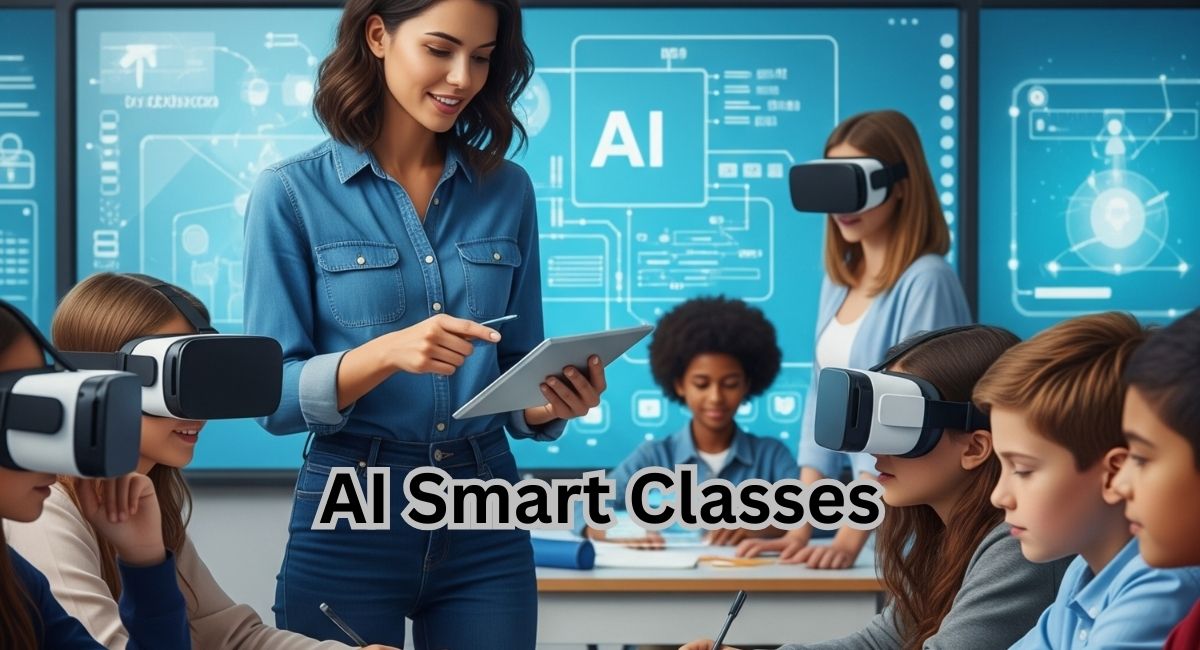
In today’s world, where knowledge becomes outdated faster, we must also update our kids methods of learning just as fast to keep up with the times. I’ve checked AIPRM data shows that only 12% of classrooms worldwide, from grades 1 to 5, have been updated with AI.
However, our children are stepping into a future where AI will be an integral part of society, shaping work life and the workforce. Where in jobs, employers won’t ask “Do you know AI?”, they’ll expect you to use it. Therefore, smart AI classrooms are essential to familiarize our children with the future.
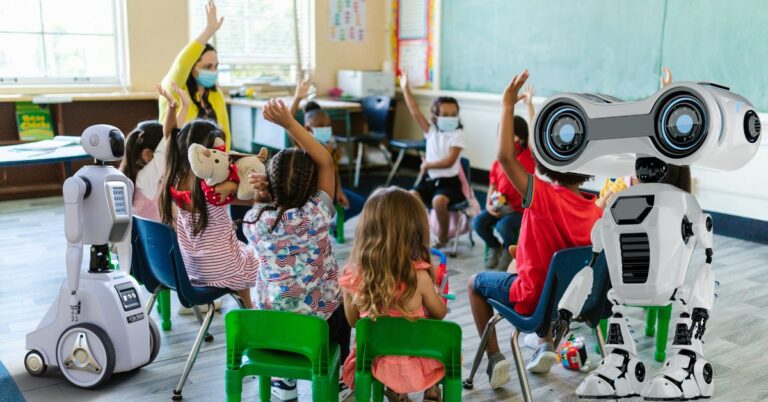
Just like in some schools in China, AI desks are being used in classrooms, allowing children to interact with them and learn and understand AI. Similarly, in India and other countries, AI teachers have been installed in classrooms.
Okay, so let’s explore what are the five ways that we can use to transform our normal classroom into an AI-powered one.
1. Keep AI Teachers (Robots) – For first interaction in the future world
Having AI teachers in smart classes is essential. According to the current EIMT report, approximately 60% of teachers are using AI to improve children’s futures.
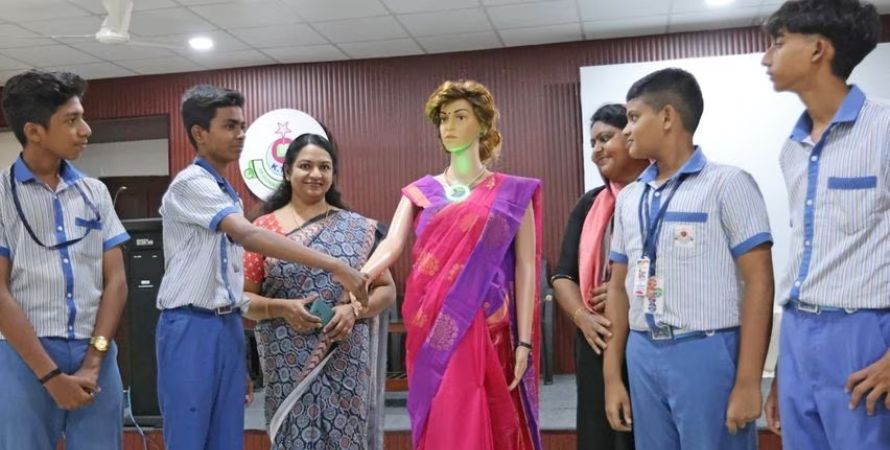
However, if we include AI teachers like Iris (KTCT Higher Secondary School in Thiruvananthapuram – INDIA) in the classroom, they could better utilize the benefits of AI to enhance our children’s development and problem-solving skills based on data insights.
Along with this, AI robo teachers can give real-time progress insights of their wards to parents and teachers. And also help them with the subject or any problem where they are stuck or laging. For a teacher, it’s difficult to trace every student where he/she is lagging in real-time.
Therefore, the future is ready to welcome AI robot teachers with open hearts. To know the list of AI teachers teaching in the world, I suggest you please read our linked post.
2. Interactive Learning Displays & Audio(VR/AR)
The greatest contribution to making a classroom smart is probably from Interactive Learning Displays. This is because learning methods are changing alongside technology; nowadays, AI desks are replacing books.
In China, AI desks are becoming very popular. On these desks, students can read and write on the built-in display. They can also perform all the activities that the teacher shows on a larger display(Interactive Learning Displays).
Additionally, AR/VR technology can be used extensively for audio and video. This allows us to help children visualize concepts that are not physically possible to show, which will increase their learning ability. And these things, in the true sense, provide a normal class with the experience of being AI-powered.
3. AI Kits for Kids (Tools & Software)
When it comes to practical applications of AI for our children, beyond just theoretical classes, AI kits come to mind. If we create a good AI class for students in grades 1-5, in addition to rhymes and basic studies, AI kits, tools, and software will play a crucial role in introducing children to AI and sparking their interests.
Just as 2-5-year-old children can now find their favorite videos on YouTube by themselves after the advent of smartphones, if students start using this kind of technology now, they will be able to strengthen their grasp on AI and reseearch in the future.
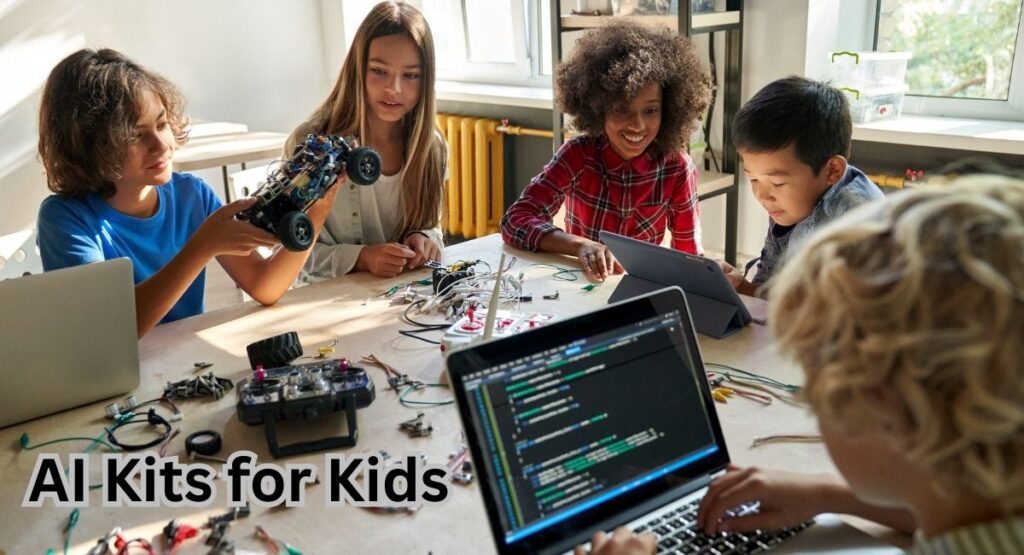
AI kits like Lego Spike, Mindstorms, and Kano play a crucial role in helping students learn to code, develop logic, and enhance their critical thinking. With these kits, children stay engaged and are motivated to develops something new on their own. At the same time, they learn from their mistakes and figure out how to work together on a project.
So, if we use AI kits and tools in our classes, they can combine with our AI teachers and other equipment to transform our classrooms into the classrooms of the future.
4. AI-powered sensors and cameras (To track the child’s response during class)
Tracking students’ activities in the classroom is essential, just as teachers in our time used to appoint class monitors to control mischief and handle small tasks like taking attendance. Similarly, in an AI-powered classroom, using AI-powered sensors and cameras is crucial.
These tools trace a child’s real-time activities and can record everything from their attendance and engagement level to their body language. They track a student’s learning speed, identify where they are making mistakes or getting stuck, and then share detailed reports with both teachers and parents.
5. AI Games & Activities – To develop a child’s brain in AI Technology
Just as we had separate periods for games in our school days, we can arrange for AI games for children in AI classrooms. These games can help them understand the **limitations and functionality of AI** and develop their ability to innovate.
For this, we can use different types of games for each class from 1 to 5, such as **Minecraft**, **Quick**, **Draw!**, and others.
These games will help develop our children’s minds, level up their skills, increase their thinking abilities, and prepare them to walk shoulder-to-shoulder with AI in the future.
6. The New-Age AI Smart Uniforms — Every Child’s True Companion
In today’s changing times, where education goes hand in hand with concerns about children’s health and safety, every parent wishes there were someone at school who could care for their child like a doctor and protect them like a bodyguard.
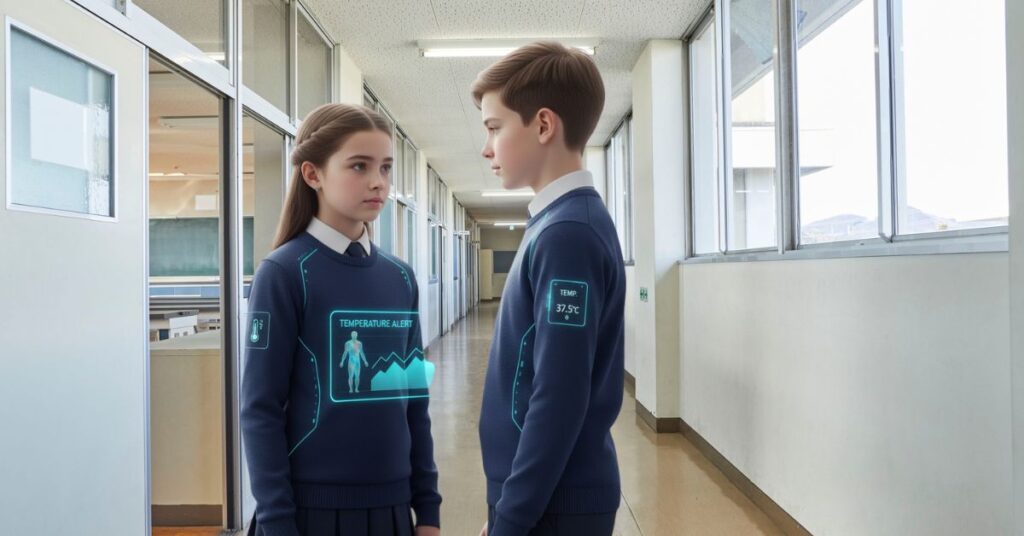
That future isn’t far away — because futuristic AI school uniforms will look after children’s learning, health, and safety — all at once.
If you’d like to know how these uniforms work, don’t miss our post 👉 “Future of AI School Uniforms.”
Conclusion:
According to a McKinsey report, by 2030, approximately 30% of jobs will be fully AI-automated. Given this, if we start teaching our children through AI smart classrooms now, we can prepare them for future jobs and technology.
This makes converting normal classrooms into AI classrooms crucial. It will not only personalize our children’s education but also help them with critical thinking, problem-solving, and creativity.
Therefore, using the five methods discussed above, we can transform our current classrooms into AI-powered ones.

Sachin Sharma is a Tech AI Writer and Chief Editor at N4GM.com, simplifying how AI is transforming education and smart learning since 2019. With deep SEO expertise, he delivers reliable insights on AI learning tools and EdTech trends, helping students and educators navigate the future of technology.