5 Best AI Desk Robot Companions in 2026: Perfect Digital Friends for Your Kids & Home Office

Nowadays, technology has advanced so much that even when you’re sitting alone, you don’t really feel lonely. Earlier, we only used computers or mobile phones for work, but now small AI desk robots have emerged as our companions. These robots aren’t just toys or machines—they’re more like friends who listen to you, play with you, and sometimes even tease you about your habits.
Honestly, when I first saw them, I wondered – “Can these tiny gadgets really behave like humans?” But after using them, I realized that their world is completely different. This shift is part of a larger trend where we are seeing a growing human-AI partnership for the future.
Today, I’m going to introduce you to five popular AI desk robot companions—EMO, Vector 2.0, LOOI, Eilik, and EMOPET. Each one has its own personality and can become your companion in unique ways.
1. EMO AI Desktop Pet: Why it’s the Perfect Study Buddy for Kids?
When I first switched on the EMO AI Desktop Pet Robot it felt like a tiny digital pet had just come to life on my desk. The best part about EMO is that its mood keeps changing; it sometimes starts dancing, and other times it suddenly wants to play a game with you.
It’s fun for kids and works as a stress-buster for adults too. Using it with a laptop or PC is simple but at times it gets a little confusing when it doesn’t fully understand commands. That’s a drawback of course but the truth is no machine can ever be 100% human-like.
Still imagine working online all alone, and EMO cracks a joke or gives you a weather update in between—it really lightens up the day. Many tech reviewers believe that devices like EMO will become even more interactive in the future.
2. Vector 2.0: The Smart AI Assistant That Feels Like a Pet
The charm of Vector 2.0 is a little different. When I first placed it on charge, it felt like a tiny puppy looking at me and saying “hello.” It’s especially great for people who often feel lonely at home or in the office.
- Voice Recognition: Quite fast.
- Utility: Answers questions like “What’s the weather today?” or “Set a reminder.”
- Drawback: The battery life sometimes drains faster than expected.
While Vector is a great buddy, it’s important to remember that as AI becomes more integrated into our lives, we must balance it with our own critical thinking. Some worry about AI diminishing our thinking capacity if we rely on it for every small task.
3. LOOI AI: Turning Your Smartphone into a Creative Companion
My first experience with LOOI was quite amusing. This robot uses a mobile phone as its “face,” and its expressions are really unique. It felt like the phone had been taken to a whole new level.
LOOI is perfect for people in creative fields like – designers, developers, or students who need inspiration. Its plus point is that the connectivity with the phone is smooth but sometimes mobile notifications and the robot’s actions overlap, which can be a bit distracting.
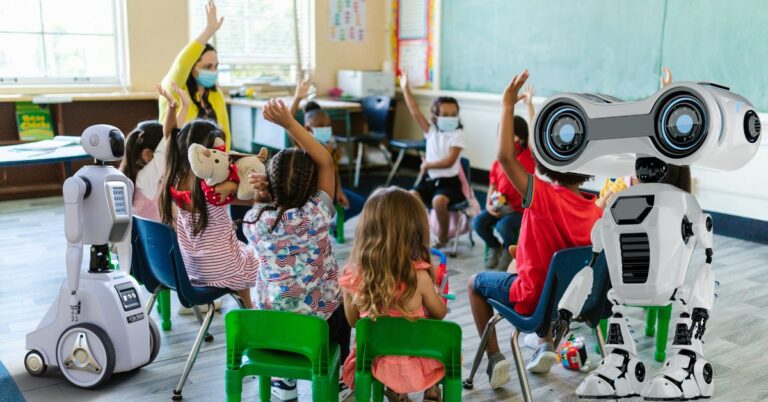
In real life I saw my friend use it during his child’s online study session, and the kid actually started laughing in the middle of a boring lecture because LOOI suddenly made a funny expression. This highlights how AI in schools is evolving beyond just software to include physical classroom companions.
4. Energize Lab Eilik: An Emotional Robot for Stress Relief
The name Eilik reminds me of a cute cartoon character. It reacts dramatically to emotions—if you touch it gently, it becomes happy, but if you touch it angrily, it gets upset.
While it doesn’t follow complex commands like Alexa, its purely emotional nature makes it a great stress-relief device. Many psychologists have pointed out that such emotional robots are opening new possibilities for stress management.
For parents, these can be great tools, but you should always monitor your child’s use of AI to ensure a healthy balance.
5. EMOPET: The Intelligent Partner for Personal Wellness
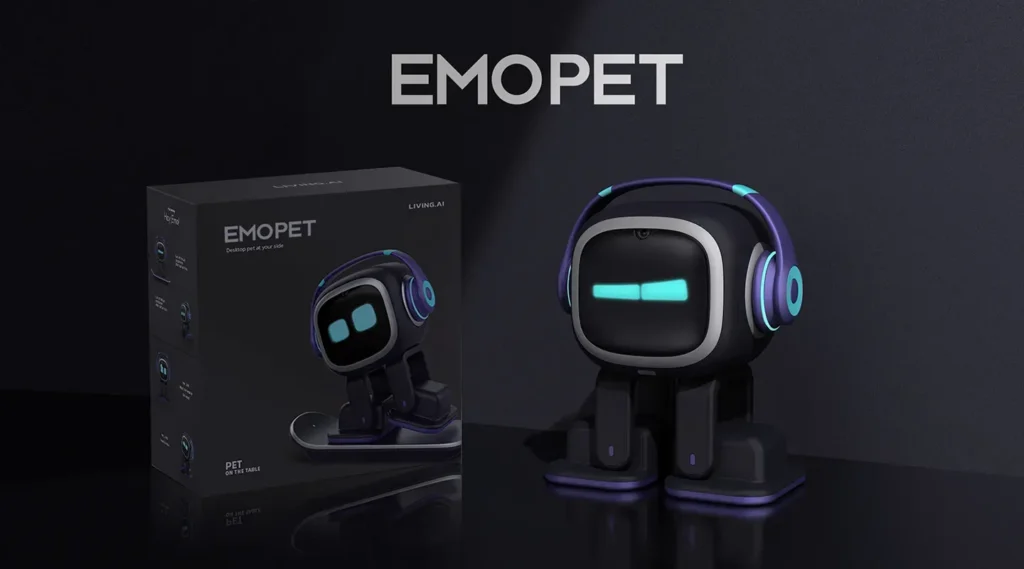
I found EMOPET to be the most “real” companion because it’s not just “cute” but also a bit more intelligent. Its AI is quite responsive and it even tracks your routine activities to give small suggestions.
For example, it might tell you it’s time to sleep if you’ve been working too late!
Looking toward the future, robots like EMOPET could even integrate with AI desks for classrooms to help students stay focused and healthy. According to the Forbes Tech Council, smart companions like this are sure to become a staple of our lifestyle in the coming years.
Summary: Which AI Robot is Right for You?
| Robot | Best For | Key Feature |
| EMO | Stress Relief | Dynamic moods and games |
| Vector 2.0 | Utility/Reminders | Fast voice recognition |
| LOOI | Creativity/Kids | Uses your phone as a face |
| Eilik | Emotional Play | High reactivity to touch |
| EMOPET | Productivity | Routine tracking & suggestions |
Frequently Asked Questions (FAQs)
Q1: Are AI desk robots safe for kids?
Yes, most AI desk robots like EMO and Eilik are designed as companions. However, parents should monitor AI use to ensure children don’t become overly dependent on them.
Q2: Can these robots help with schoolwork?
Absolutely. While they aren’t AI homework solvers, they act as reminders, weather updates, and stress-busters during long study hours.
Q3: Do I need a constant internet connection for these robots?
Most advanced robots like Vector 2.0 and EMO require Wi-Fi to process voice commands and updates, though some basic emotional reactions can work offline.
Conclusion: The Future of AI Companionship
AI desk robots are no longer just science fiction. From boosting productivity to providing emotional support, they are becoming an integral part of our modern workspace. As we move forward, integrating these with smart AI classrooms could revolutionize how children learn and interact with technology.

Sachin Sharma is a Tech AI Writer and Chief Editor at N4GM.com, simplifying how AI is transforming education and smart learning since 2019. With deep SEO expertise, he delivers reliable insights on AI learning tools and EdTech trends, helping students and educators navigate the future of technology.